
Size an electric fire pump motor and select its starting method as one listed system with the pump and controller. The motor must carry the pump's required load across the applicable performance curve and start on the available electrical source without unacceptable voltage effects. Use the pump power curve, motor and controller listings, service factor rules where applicable, locked-rotor characteristics, conductor and transformer data, and emergency-power strategy. Do not use normal process-pump motor sizing shortcuts without checking fire-pump requirements. Keep the calculation and acceptance record with the final project documents so future tests use the same basis.
Segurança e âmbito: As bombas de incêndio e respetivos acionadores são equipamento de segurança de vida. Os trabalhos hidráulicos, elétricos, a diesel, de combustível, de bateria, de pressão, de equipamento rotativo, de ensaio e de anomalias devem seguir o projeto aprovado em vigor, as instruções do fabricante, as normas aplicáveis e a autoridade com jurisdição. Este guia explica o caminho de decisão de engenharia; não autoriza alterações em campo, desvios ou a operação por pessoal não qualificado.
Use the complete pump power curve
Review brake power from churn through the required high-flow region. Confirm whether the selected impeller and speed can overload the proposed motor. Treat this as a system condition rather than an isolated component choice. Identify the source of every input, the unit used, the operating condition it represents, and the person responsible for approval. If information is preliminary, mark the assumption and test how the decision changes at a conservative boundary. This prevents a neat calculation from hiding an uncertain water level, pressure, valve position, driver condition, or simultaneous demand.
For fire pump motor sizing, verify this section against the selected pump curve, the actual site arrangement, manufacturer instructions, and the current requirements accepted by the authority having jurisdiction. Check the installed condition as well as the drawing because pipe routes, elevations, supports, controls, and access often change during construction. Record the result in a form that can be repeated during commissioning and later inspection. Do not change a safety-critical setting or isolate fire protection without the approved impairment and restoration process.
Match voltage, phase, and frequency
The motor, controller, utility, generator, and transfer arrangement must share compatible ratings and tolerate actual voltage conditions. The most useful evidence is measured or approved project data, not a copied rule of thumb. Identify the source of every input, the unit used, the operating condition it represents, and the person responsible for approval. If information is preliminary, mark the assumption and test how the decision changes at a conservative boundary. This prevents a neat calculation from hiding an uncertain water level, pressure, valve position, driver condition, or simultaneous demand.
For fire pump motor sizing, verify this section against the selected pump curve, the actual site arrangement, manufacturer instructions, and the current requirements accepted by the authority having jurisdiction. Check the installed condition as well as the drawing because pipe routes, elevations, supports, controls, and access often change during construction. Record the result in a form that can be repeated during commissioning and later inspection. Do not change a safety-critical setting or isolate fire protection without the approved impairment and restoration process.
Understand starting current
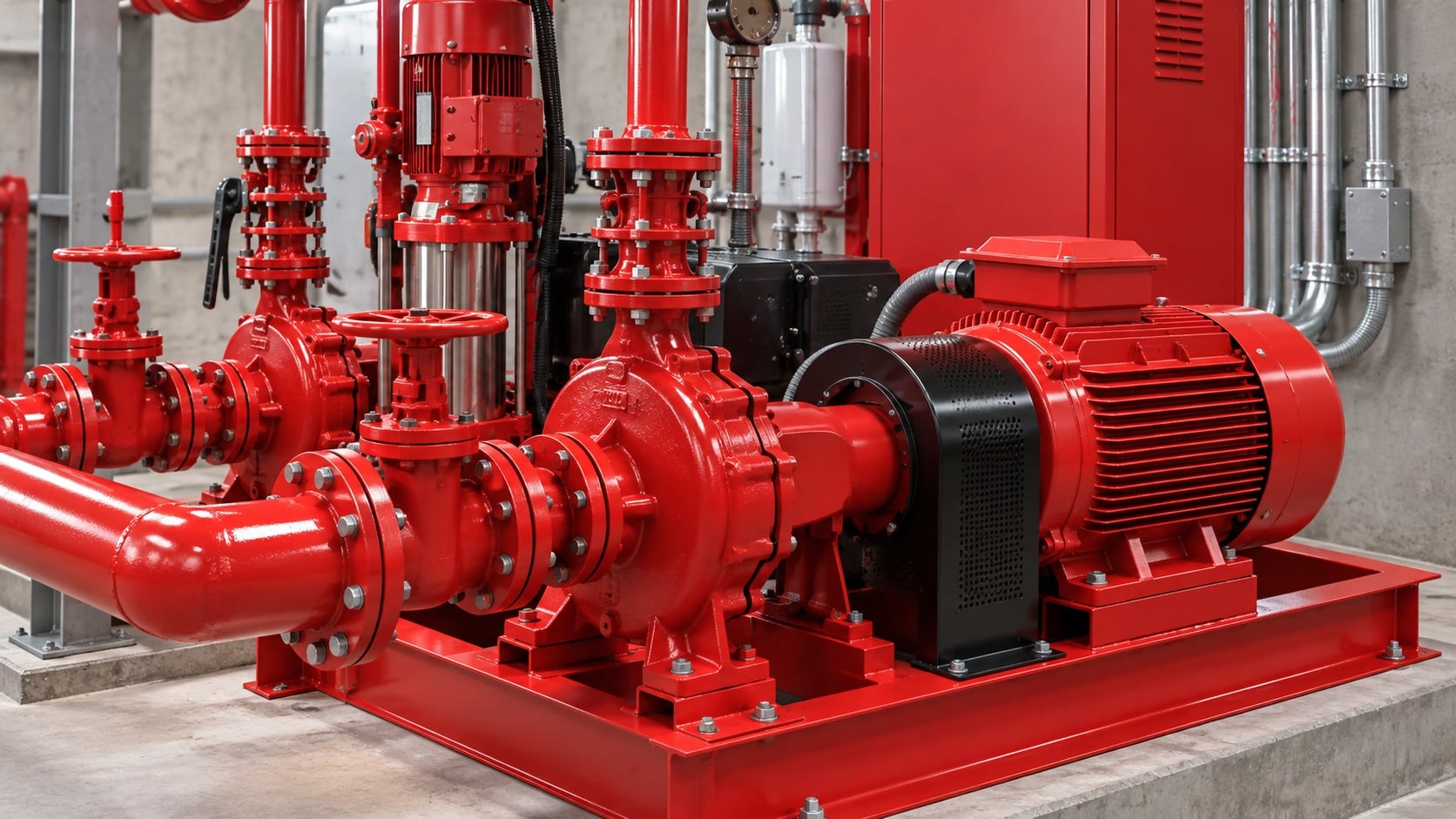
Across-the-line starting is simple but can create a large voltage dip. Reduced-voltage methods change current and torque and must be approved for the application. Review this condition at normal, test, and credible abnormal states before procurement. Identify the source of every input, the unit used, the operating condition it represents, and the person responsible for approval. If information is preliminary, mark the assumption and test how the decision changes at a conservative boundary. This prevents a neat calculation from hiding an uncertain water level, pressure, valve position, driver condition, or simultaneous demand.
For fire pump motor sizing, verify this section against the selected pump curve, the actual site arrangement, manufacturer instructions, and the current requirements accepted by the authority having jurisdiction. Check the installed condition as well as the drawing because pipe routes, elevations, supports, controls, and access often change during construction. Record the result in a form that can be repeated during commissioning and later inspection. Do not change a safety-critical setting or isolate fire protection without the approved impairment and restoration process.
Compare starting methods
Review full-voltage, autotransformer, primary resistor or reactor, part-winding, wye-delta, and approved solid-state arrangements according to the specific system and listing. The design team should turn this point into a traceable calculation or drawing note. Identify the source of every input, the unit used, the operating condition it represents, and the person responsible for approval. If information is preliminary, mark the assumption and test how the decision changes at a conservative boundary. This prevents a neat calculation from hiding an uncertain water level, pressure, valve position, driver condition, or simultaneous demand.
For fire pump motor sizing, verify this section against the selected pump curve, the actual site arrangement, manufacturer instructions, and the current requirements accepted by the authority having jurisdiction. Check the installed condition as well as the drawing because pipe routes, elevations, supports, controls, and access often change during construction. Record the result in a form that can be repeated during commissioning and later inspection. Do not change a safety-critical setting or isolate fire protection without the approved impairment and restoration process.
Tabela de decisão prática
| Starting option | Main benefit | Key review |
|---|---|---|
| Full-voltage | Simple and high starting torque | Source voltage dip and capacity |
| Autotransformer | Reduced line current | Approved taps, transition, and torque |
| Primary resistor/reactor | Reduced starting current | Voltage, heat, torque, transition |
| Part-winding | Uses suitable motor winding design | Motor compatibility and sequence |
| Wye-delta | Reduced current with specific motor | Lead arrangement and torque |
| Approved solid-state method | Controlled electrical transition | Listing, bypass, heat, and reliability |
Check source capacity and voltage drop
Model utility or generator impedance, transformer, conductors, starting current, simultaneous loads, and minimum acceptable terminal voltage. Treat this as a system condition rather than an isolated component choice. Identify the source of every input, the unit used, the operating condition it represents, and the person responsible for approval. If information is preliminary, mark the assumption and test how the decision changes at a conservative boundary. This prevents a neat calculation from hiding an uncertain water level, pressure, valve position, driver condition, or simultaneous demand.
For fire pump motor sizing, verify this section against the selected pump curve, the actual site arrangement, manufacturer instructions, and the current requirements accepted by the authority having jurisdiction. Check the installed condition as well as the drawing because pipe routes, elevations, supports, controls, and access often change during construction. Record the result in a form that can be repeated during commissioning and later inspection. Do not change a safety-critical setting or isolate fire protection without the approved impairment and restoration process.
Coordinate controller and protection
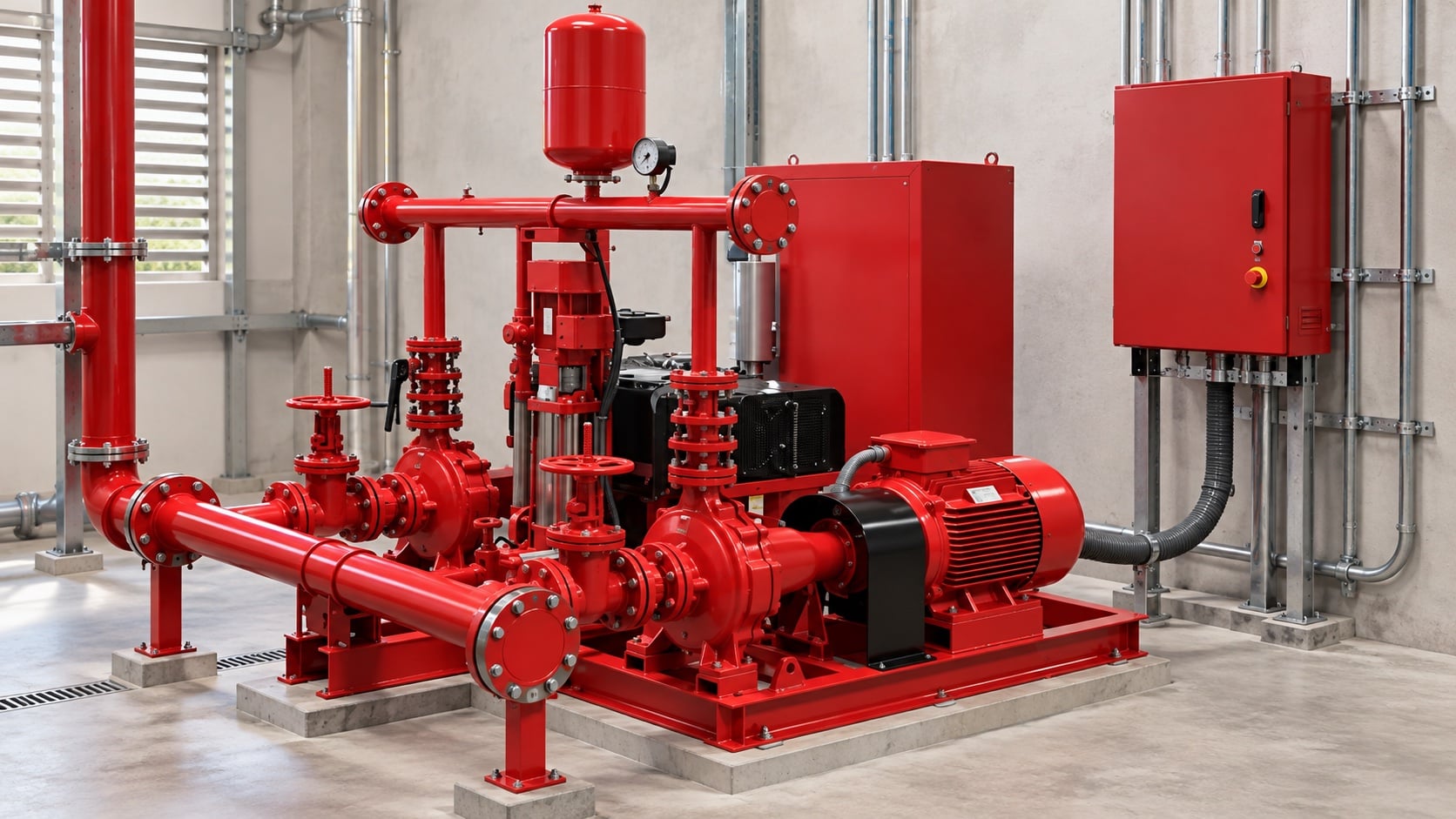
Fire pump controllers have a specialized operating purpose. Do not apply ordinary motor protection or shutdown logic that could prevent required operation. The most useful evidence is measured or approved project data, not a copied rule of thumb. Identify the source of every input, the unit used, the operating condition it represents, and the person responsible for approval. If information is preliminary, mark the assumption and test how the decision changes at a conservative boundary. This prevents a neat calculation from hiding an uncertain water level, pressure, valve position, driver condition, or simultaneous demand.
For fire pump motor sizing, verify this section against the selected pump curve, the actual site arrangement, manufacturer instructions, and the current requirements accepted by the authority having jurisdiction. Check the installed condition as well as the drawing because pipe routes, elevations, supports, controls, and access often change during construction. Record the result in a form that can be repeated during commissioning and later inspection. Do not change a safety-critical setting or isolate fire protection without the approved impairment and restoration process.
Plan generator operation
If an alternate source is used, verify starting and running capacity, transfer sequence, fuel, ventilation, and the effect of other emergency loads. Review this condition at normal, test, and credible abnormal states before procurement. Identify the source of every input, the unit used, the operating condition it represents, and the person responsible for approval. If information is preliminary, mark the assumption and test how the decision changes at a conservative boundary. This prevents a neat calculation from hiding an uncertain water level, pressure, valve position, driver condition, or simultaneous demand.
For fire pump motor sizing, verify this section against the selected pump curve, the actual site arrangement, manufacturer instructions, and the current requirements accepted by the authority having jurisdiction. Check the installed condition as well as the drawing because pipe routes, elevations, supports, controls, and access often change during construction. Record the result in a form that can be repeated during commissioning and later inspection. Do not change a safety-critical setting or isolate fire protection without the approved impairment and restoration process.
Test the integrated system
Witness starting on each source, transfer where applicable, current, voltage, rotation, controller alarms, and pump performance without unauthorized trips. The design team should turn this point into a traceable calculation or drawing note. Identify the source of every input, the unit used, the operating condition it represents, and the person responsible for approval. If information is preliminary, mark the assumption and test how the decision changes at a conservative boundary. This prevents a neat calculation from hiding an uncertain water level, pressure, valve position, driver condition, or simultaneous demand.
For fire pump motor sizing, verify this section against the selected pump curve, the actual site arrangement, manufacturer instructions, and the current requirements accepted by the authority having jurisdiction. Check the installed condition as well as the drawing because pipe routes, elevations, supports, controls, and access often change during construction. Record the result in a form that can be repeated during commissioning and later inspection. Do not change a safety-critical setting or isolate fire protection without the approved impairment and restoration process.
Como isto se relaciona com o equipamento BORRAPUMP
A BORRAPUMP fornece equipamento de bombagem concebido por engenharia para projetos de água e proteção contra incêndios. Reveja o relevante Configuração do produto BORRAPUMP como ponto de partida, submeta seguidamente o caudal, a altura manométria, a fonte de água, o acionador, a potência, os controlos, as condições do local, os requisitos aplicáveis, a quantidade e o destino. A seleção final deve utilizar a base hidráulica do projeto e a submissão aprovada; este guia não afirma que uma disposição de catálogo se adapta a todas as jurisdições ou riscos.
Guias BORRAPUMP relacionados
- noções básicas de conceção de sistemas de bombagem de incêndio
- fire fighting pump selection
- bombas de incêndio a gasóleo versus elétricas
Referências fidedignas
As fontes seguintes estabelecem os limites normativos, o contexto de segurança contra incêndios e os princípios dos sistemas de bombagem utilizados neste guia. Aplique sempre a edição e a adoção local aceites para o projeto.
- Página de desenvolvimento da norma NFPA 20
- Recursos de sistemas de bombagem do Departamento de Energia dos EUA
- investigação sobre protecção contra incêndios do NIST
Vídeo educativo
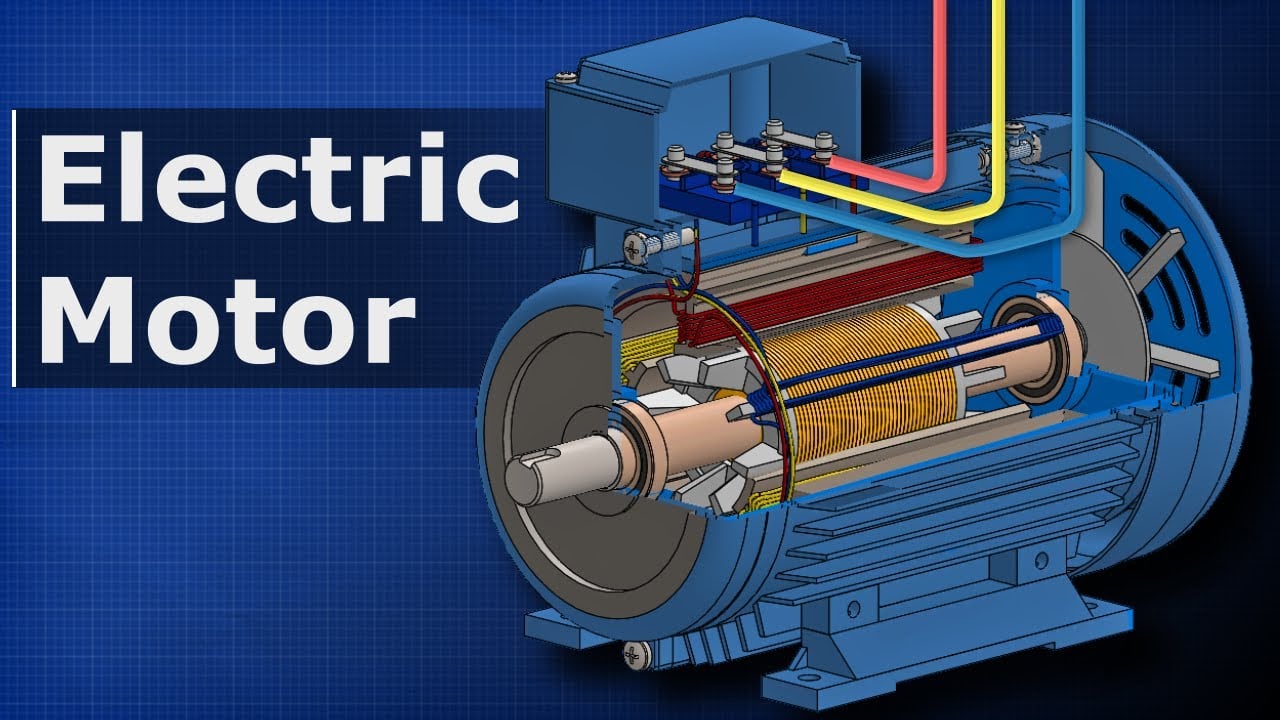
Habilitações literárias por The Engineering Mindset: Como Funcionam os Motores Elétricos: Motores de Indução CA Trifásicos. O vídeo apoia o conceito de engenharia subjacente e não substitui os requisitos de proteção contra incêndio específicos do projeto.
Perguntas frequentes
Can I size the motor only at rated pump flow?
No. Review the applicable pump power curve and the requirements governing motor selection across the operating range.
Is a soft starter always best?
No. The starting method must be approved, reliable, and compatible with motor torque, source capacity, controller, and project requirements.
Why check generator voltage dip?
Low voltage during starting can prevent acceleration or disturb other emergency loads.
Can normal overload protection stop a fire pump?
Fire pump controller protection and operating logic are specialized. Follow the approved listed arrangement.
Lista de verificação de verificação final
Antes da aprovação, confirme a base hidráulica, a condição da captação de água, a curva da bomba selecionada, os dados do acionador e do controlador, as pressões nominais dos componentes, o arranjo das válvulas, o método de ensaio, o acesso, a drenagem, os alarmes e o procedimento de restabelecimento. Resolva as divergências entre os desenhos e o sistema instalado. Durante a comissão, utilize instrumentos calibrados e registe a pressão de aspiração, a pressão de descarga, o caudal, a velocidade, a condição do acionador, os alarmes e as observações anómalas em cada ponto necessário. Mantenha os resultados aceites junto dos registos da casa de bombas para que inspeções posteriores comparem dados equivalentes.