
A jet pump lifts water from a well or shallow source; a booster pump adds pressure to water that is already in a supply line. The comparison is a duty question, not a horsepower contest. If the problem starts at the water table, selection belongs on the well-supply side. If water already reaches the building but pressure is too low, selection belongs on the booster side. For the full booster cluster, see the Booster Pumps guide.
Part 1. What Does a Jet Pump Do Compared with a Booster Pump?
A jet pump is a well-supply machine. An above-ground motor drives a centrifugal stage and a jet ejector that creates suction to pull water up from a well, cistern, or shallow source. Shallow-well jet pumps are commonly discussed for water levels within roughly 25 feet of the pump, while deep-well jet arrangements move the ejector down the well to reach greater depths. Plumbing Supply and More and major jet-pump manufacturers group these units with pressure tanks and pressure switches as complete household well systems.
A booster pump does not replace that source-lifting job. It increases pressure on water that is already available at the suction flange — municipal entry, a storage tank outlet, or a pressurized line from an upstream well pump. BORRAPUMP’s booster definition article describes this as adding energy where flow exists but residual pressure is too low for the downstream system.
| Factor | Jet pump | Booster pump |
|---|---|---|
| Primary duty | Lift water from a well or shallow source and build initial system pressure | Increase or stabilize pressure in an existing supply line |
| Typical location | Above ground at the well head or utility room | After meter, break tank, or upstream well pump |
| Suction condition | Suction lift / venturi draw from below | Flooded suction or stable inlet pressure |
| Main selection inputs | Water depth, lift, peak household GPM, tank and switch settings | Inlet pressure at peak flow, required outlet pressure, friction and elevation |
| Common mistake | Calling any small pump on a well a “booster” | Installing a booster where the well cannot deliver required flow |
Part 2. How Do Suction Lift and Source Arrangement Differ?
Jet pumps are built around suction lift physics. A shallow-well jet pulls water through one pipe with an ejector in or near the pump body. A deep-well jet sends pressurized water down one pipe and returns mixed flow up a second pipe with the ejector set near the water level. Watermainsupply notes that standard centrifugal suction alone is limited, while jet ejectors extend reachable depth — but only within the depth class the manufacturer documents.
Booster pumps assume the suction side can stay filled and stable. They are not a substitute for lifting water 80 feet from a dry suction line. If the suction vessel runs dry, the booster loses net positive suction head and can cavitate. For suction-side behavior on open sources, review what is a self-priming pump — self-priming centrifugal pumps solve a different problem than jet ejectors and still do not replace deep-well jet or submersible duty.
Practical source routing:
| Water source signal | First pump type to evaluate | Why |
|---|---|---|
| Shallow well, cistern, or buried tank with suction lift | Jet pump, deep-well jet, or submersible | Source must be lifted before distribution |
| Municipal or utility supply with verified flow but low pressure | Booster pump or booster package | Source exists; pressure is the gap |
| Storage tank feeding a building by gravity with weak pressure | Booster after tank | Tank provides volume; booster provides head |
| Open canal, pit, or irrigation sump with suction lift | Self-priming or source pump route per medium | Not a building booster label by default |
Part 3. How Do Pressure, Flow, and Pump Curves Compare?
Both pump types obey the same hydraulic rule: the operating point is where the pump curve meets the system curve. Hydraulic Institute material stresses that flow and head must be evaluated together at that intersection, not from catalog maximums alone.
On a jet well system, the pump must deliver enough flow at the cut-out pressure to supply peak household demand while keeping the pressure tank within its switch differential. Buying guides such as Plumbing Supply and More commonly discuss matching pump GPM to home demand bands — for example, smaller homes near a few GPM and larger homes toward 8–12 GPM — before comparing horsepower labels.
On a booster system, the question is different: given a measured inlet pressure at peak flow, what additional head is required to reach the fixture target after elevation and friction? That is the same duty logic used in residential booster pump selection and transfer pump vs booster pump, where transfer moves volume between points and boost stabilizes pressure.
| Measurement | Jet pump selection | Booster pump selection |
|---|---|---|
| Static water level / lift | Defines shallow vs deep jet vs submersible | Usually not the first input |
| Peak flow | Household or zone demand | Peak simultaneous building demand |
| Pressure target | Tank cut-in/cut-out and fixture range | Residual at highest or weakest fixture |
| Inlet condition at peak flow | Suction lift and air/leak risk | Dynamic inlet pressure at booster suction |
Part 4. What Controls and Pressure Tanks Are Typical on Each System?
Jet well packages are traditionally controlled by a pressure switch and hydropneumatic tank. The tank reduces short cycling and stores drawdown between cut-in and cut-out settings. Switch differentials such as 30/50 psi or 40/60 psi appear frequently in residential well discussions, but the correct setting depends on pump curve, tank pre-charge, and fixture limits.
Booster systems more often use pressure transducers, VFDs, staging logic, or packaged controllers. A hydropneumatic tank may still help some constant-speed boosters, but the control story centers on holding outlet pressure while demand swings.
Do not assume one tank size fits every label. A jet tank sized for a 1/2 HP well pump will not automatically fix a booster cycling problem on a multi-story line. Tank volume, pre-charge, and whether the issue is hydraulics or thermal expansion must be diagnosed separately.
Part 5. When Do You Need a Jet Pump, a Booster, a Submersible, or Both?
Use this decision path before requesting a quote:
- Is water already at the pump suction at the required flow? If no, start with jet, deep-well jet, or submersible well equipment — not a booster.
- Is the complaint weak fixtures while the well pump and tank cycle normally? Measure pressure at the house entry during peak use. If flow is adequate but pressure is low, a booster may be appropriate downstream.
- Is the supply municipal with verified meter flow? A jet pump is usually the wrong category. Compare booster packages and building friction losses instead.
- Is the job irrigation from a canal or sump? That is often a self-priming or irrigation transfer route, not a household jet package and not a building booster by default.
Some properties use both pump types in series: a well jet or submersible lifts and stores water, then a booster raises pressure for long runs, upper floors, or equipment that needs higher residual pressure. Hamsa Enviro’s pump comparison describes that pattern for homes where the well pump alone no longer satisfies modern fixture demand. Any series arrangement needs check valves, control coordination, and professional review so the booster does not fight the well pump’s tank logic.
Submersible pumps deserve a mention in the same conversation because depth often decides the well side before booster discussion begins. Below typical shallow jet limits, many U.S. residential projects move to a submersible in the well rather than an above-ground jet. That selection is outside BORRAPUMP’s jet-less catalog but prevents a common error: quoting a booster when the well pump itself is undersized.
Part 6. What Selection Mistakes Send Buyers to the Wrong Pump Type?
| Mistake | Why it fails | Better first step |
|---|---|---|
| Labeling every well pump a “booster” | Hides the suction-lift requirement | Name the source duty first |
| Installing a booster on a dry or air-bound suction line | Booster needs stable inlet | Restore prime or fix source pump |
| Choosing jet depth class from horsepower only | Depth and ejector arrangement set the class | Measure static water level |
| Using a booster to fix an empty well or clogged screen | Boosters do not create source flow | Check well yield and suction plumbing |
| Copying a neighbor’s tank switch settings | Curve and tank pre-charge differ | Match settings to your pump curve |
| Sending only HP and voltage in the RFQ | Suppliers cannot plot a duty point | Send flow, head/pressure, and inlet data |
Part 7. Which BORRAPUMP Routes Fit Boosting, and What Stays Outside Scope?
BORRAPUMP is a building and industrial water-boosting supplier. The company does not manufacture shallow-well or deep-well jet pumps. If your project starts at the well water table, work with a well-pump supplier for jet, deep-well jet, or submersible equipment first. When the project need is verified pressure boosting on a stable inlet, these BORRAPUMP routes are common export starting points:
| Project signal | BORRAPUMP route | Notes |
|---|---|---|
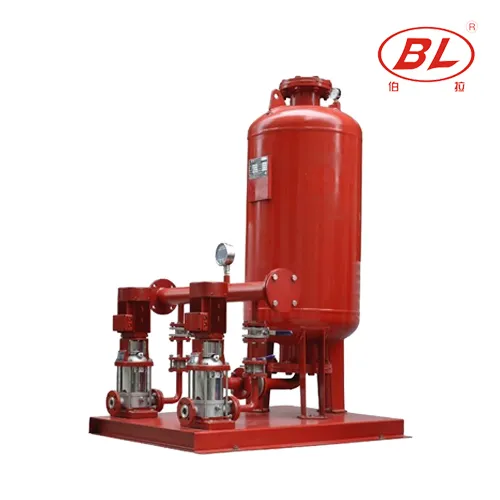
| Packaged building water boosting | Booster Regulator Water Supply Equipment | Confirm inlet flow and target pressure before package selection |
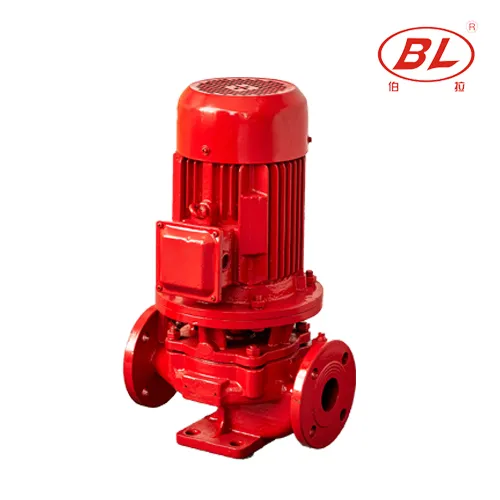
| Inline booster in a mechanical room | ISG Vertical Inline Boost Water Pump | Review inline duty and installation fit with the project engineer |
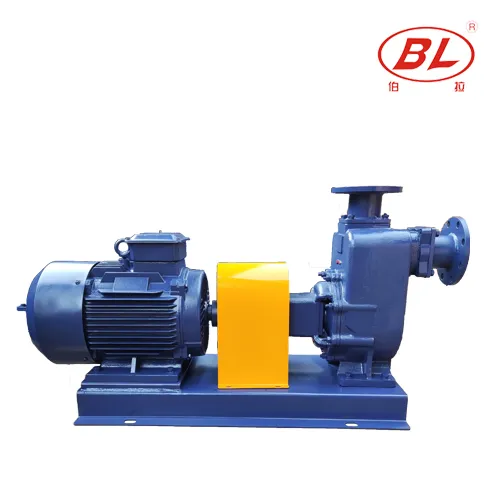
| Open-source irrigation or suction lift on clean water | ZX Self-Priming Water Pump for Irrigation | Not a shallow-well jet substitute; verify suction lift and priming |
| Tank-to-building clean-water transfer | IS Clean Water Centrifugal Pump | Use when the job is movement from storage, not pressure boost |
RFQ checklist
| Data item | Why the supplier needs it |
|---|---|
| Water source type (well, municipal, tank) | Separates jet/submersible from booster scope |
| Static water level or suction lift | Defines whether boosting is even in scope |
| Peak flow and pressure target | Sets duty point |
| Measured inlet pressure at peak flow | Defines required boost |
| Pipe route, elevation, and major losses | Sets system head |
| Existing pump type and control settings | Avoids fighting upstream logic |
| Medium, temperature, and power supply | Matches materials and motor |
| Quantity, destination, and delivery plan | Export quotation inputs |
Send completed data through contact Borra or your usual export channel.
Fit Boundary
This article compares jet and booster duties for buyer education. It does not approve equipment for code compliance, certify well construction, or replace a licensed well contractor. BORRAPUMP routes cover boosting and selected clean-water pumps only — not jet pumps or submersible well pumps.
FAQ
What is the main difference between a jet pump and a booster pump?
A jet pump lifts water from a well or shallow source and creates initial system pressure. A booster pump increases pressure on water that is already supplied to its inlet.
Can a booster pump replace a jet pump on a well?
No. A booster expects a flooded or pressurized suction. It cannot replace the venturi lift function of a jet pump or the submerged lift of a submersible well pump.
Do jet pumps need a pressure tank?
Most residential jet packages use a hydropneumatic tank and pressure switch to limit cycling and store drawdown. Tank size and switch settings must match the pump curve.
What depth can a shallow well jet pump handle?
Shallow-well jet pumps are commonly discussed for water levels within about 25 feet of the pump. Deeper settings typically move to deep-well jet or submersible equipment.
When should a booster pump be installed after a well pump?
Consider a downstream booster when the well pump delivers adequate flow but distribution pressure is still too low at remote fixtures, long runs, or upper floors. Measure inlet pressure under peak use before selecting the booster.
Is a jet pump or booster pump better for municipal low pressure?
Municipal low pressure is usually a booster application, not a jet pump application, because the utility already supplies water to the building entry. Verify meter capacity and inlet flow first.
Can one pump lift from a well and boost a high-rise building?
A single residential jet pump is rarely sized for both deep lift and high-rise boosting. Many projects use a well pump plus a separate booster, or a submersible well pump plus a booster, subject to engineering review.
What data should I send a pump supplier?
Provide source type, water depth or inlet pressure, peak flow, target pressure, pipe losses, existing controls, medium, power supply, and project destination so the supplier can separate well-supply scope from boosting scope.