
Self-priming depends on retained casing liquid and an internal air-separation cycle; it is not dry running. A self-priming centrifugal pump uses stored liquid in the casing to mix with incoming air, vent that air, and gradually fill the suction line until normal pumping begins. For the cluster overview, see the self-priming pump guide.
Contents
- Part 1. What Happens During Self-Priming?
- Part 2. Why Does the Casing Liquid Matter?
- Part 3. What Limits Suction Lift?
- Part 4. Which Startup Checks Prevent Priming Failure?
- Part 5. How Is It Different from a Standard Centrifugal Pump?
- Part 6. Which BORRAPUMP Products Fit the Duty?
- Part 7. What Are the Fit Boundaries?
- FAQ
Part 1. What Happens During Self-Priming?
A self-priming centrifugal pump still uses a centrifugal impeller, but the casing is designed to hold liquid and manage air before the suction line is fully flooded. The working cycle can be read as four repeating steps:
| Step | What happens inside the pump | What the operator sees |
|---|---|---|
| 1. Start with casing charge | Impeller spins retained liquid in the reservoir | Discharge may spit air/water mix briefly |
| 2. Air enters suction line | Liquid-air mixture is thrown outward in the casing | Vacuum builds in the suction pipe |
| 3. Air separation | Lighter air rises and vents through the discharge path | Air bubbles at discharge reduce over time |
| 4. Liquid fill | De-aerated liquid returns to the casing; source liquid rises in suction | Steady flow replaces intermittent air purge |
Hydraulic Institute selection material treats all centrifugal pumps as liquid-moving machines at the impeller — air must leave the suction path before stable duty begins. Self-priming designs add casing volume and recirculation paths so the pump can perform that air-removal work without manual filling at every restart.
This article focuses on how the cycle works. For the buyer-facing definition and terminology, see what is a self-priming pump. For step-by-step startup, see how to prime a self-priming pump.
Part 2. Why Does the Casing Liquid Matter?
The retained liquid is the working seal that lets the impeller move air instead of spinning in empty space. Without that charge, the impeller contacts mostly air, heat builds at the seal and internal clearances, and priming cannot start.
| Condition | Effect on priming | Risk if ignored |
|---|---|---|
| Correct initial casing fill | Recirculation cycle starts immediately | Normal priming time |
| Low casing liquid | Weak air removal; longer or incomplete prime | Seal heat and dry-run damage |
| Empty casing | No recirculation medium | Immediate dry-run risk |
| Leaking casing drain or plug | Liquid charge lost between runs | "Won't hold prime" complaints |
| Wrong liquid in casing | May affect seal compatibility | Startup failure or seal damage |
Self-priming does not mean unlimited tolerance for dry operation. Stop the pump if priming does not complete within the manufacturer's allowed time and diagnose suction leaks, lift, or blockage before restarting.
Part 3. What Limits Suction Lift?
Suction lift is bounded by atmospheric pressure, not by marketing labels. A pump creates low pressure at the impeller eye; atmospheric pressure on the open source pushes liquid up the suction pipe.
| Factor | Effect on usable lift | Field note |
|---|---|---|
| Site elevation | Lower atmospheric pressure at altitude | De-rate catalogue lift |
| Liquid temperature | Higher vapor pressure reduces NPSH margin | Hot water lifts less reliably |
| Suction pipe length and diameter | Friction and velocity losses reduce margin | Keep suction short and airtight |
| Air leaks in suction line | Breaks vacuum; stalls air removal | Most common priming failure |
| Elbows, foot valves, strainers | Add loss and trap air pockets | Minimize fittings above source |
| Pump design and clearance | Sets manufacturer lift rating | Compare curves, not HP alone |
Engineering Toolbox pump basics and industry field guides commonly cite a theoretical atmospheric limit near 34 ft (10.3 m) at sea level for water, with practical self-priming installs often planned well below that after friction, temperature, and leakage margins.
Do not size from catalogue maximum lift alone. Send suction lift, pipe layout, liquid temperature, and elevation with the RFQ so the supplier can confirm margin on the curve.
Part 4. Which Startup Checks Prevent Priming Failure?
Use this checklist before every first start or after service. Detailed startup sequence lives in the priming startup guide.
| Check item | Pass criteria | If it fails |
|---|---|---|
| Casing liquid charge | Filled to manufacturer mark | Prime cannot begin; seal risk |
| Suction line tightness | No audible air draw at joints | Fix gaskets, unions, hose clamps |
| Foot valve or check valve | Holds or releases per design intent | Leakback or blocked suction |
| Rotation direction | Matches arrow on casing | Reverse flow, no prime |
| Discharge valve position | Allows air purge path during prime | Air lock at discharge |
| Suction strainer | Clean and submerged | Cavitation or air ingestion |
| Lift within rated range | Static lift plus losses within curve | Select different pump or move pump closer |
Pumps & Systems self-priming coverage often notes that most priming failures are suction-side, not impeller defects — leaks, lift, and blocked lines appear before internal wear.
Part 5. How Is It Different from a Standard Centrifugal Pump?
Both pumps move liquid with a centrifugal impeller. The difference is behavior when the suction line contains air.
| Aspect | Self-priming centrifugal pump | Standard centrifugal pump |
|---|---|---|
| Suction line with air | Evacuates air using casing recirculation | Air-binds; flow stops |
| Initial fill | Needs casing charge; may re-prime after | Needs flooded suction or manual fill each start |
| Casing design | Larger liquid reservoir | Compact volute |
| Typical install | Pump above liquid, portable transfer | Flooded suction, fixed base |
| Efficiency | Slightly lower due to reservoir volume | Often higher at same duty on flooded suction |
| Best fit | Open-source lift, intermittent restart | Continuous duty with stable flooded inlet |
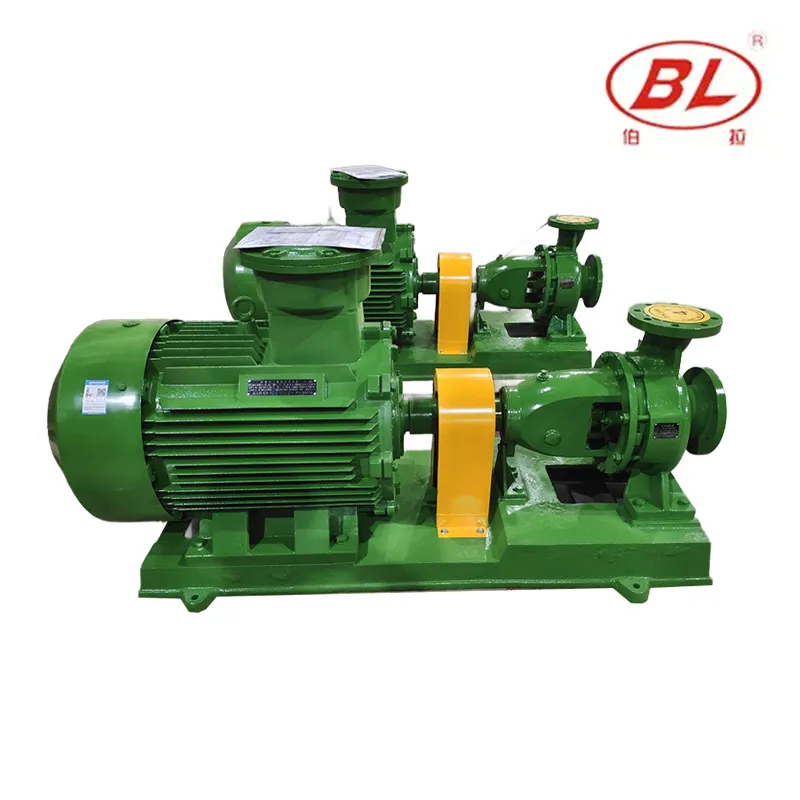
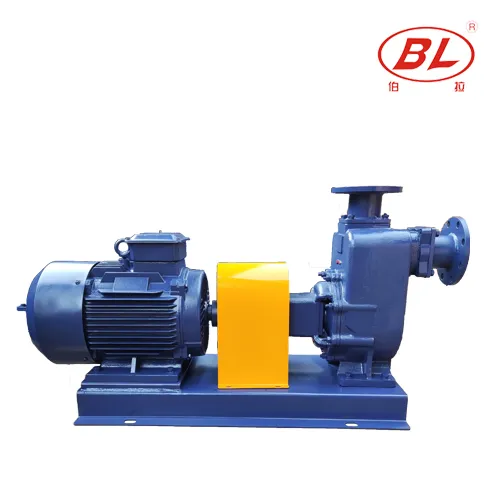
When the source can flood the suction and stay running, an IS clean water centrifugal pump may be the better hydraulic choice. When the pump must sit above the liquid and restart unattended, a self-priming route such as the ZX Self-Priming Water Pump for Irrigation is more relevant.
Self-priming centrifugal pumps are not jet pumps. Jet pumps use an ejector to lift from wells; that duty is explained in jet pump vs booster pump.
Part 6. Which BORRAPUMP Products Fit the Duty?
| Application signal | BORRAPUMP route | Notes |
|---|---|---|
| Clean-water suction lift, irrigation, open pit | ZX Self-Priming Water Pump for Irrigation | Confirm lift, flow, and medium |
| Flooded suction clean-water transfer | IS Clean Water Centrifugal Pump | Not a self-priming substitute |
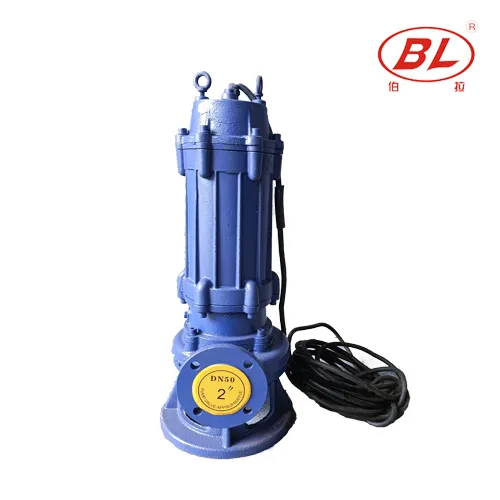
| Dirty water, sewage, or solids in sump | WQ Submersible Sewage Pump | Do not use clean-water self-primer |
RFQ checklist
| Data item | Why the supplier needs it |
|---|---|
| Flow and total head at duty point | Sizes impeller and motor |
| Static suction lift and pipe layout | Confirms self-priming feasibility |
| Liquid type, temperature, solids | Sets materials and pump family |
| Duty cycle and restart frequency | Validates self-priming advantage |
| Power supply | Matches motor |
| Installation environment | Mounting and enclosure |
| Quantity and destination | Export quotation inputs |
Send completed data through contact Borra.
Fit Boundary
This article explains working principles for clean-water self-priming education. It does not promise a universal suction lift, replace a pump manual, or approve sewage duty on clean-water models.
Part 7. What Are the Fit Boundaries?
Final performance depends on the verified curve, suction arrangement, and medium — not on the phrase "self-priming" alone.
Do not assume:
- Dry running is safe because the label says self-priming.
- A clean-water self-primer can handle sewage without a solids-rated model.
- Catalogue lift applies at your elevation and liquid temperature without de-rating.
Manufacturer limits, seal compatibility, and installation detail govern acceptance testing.
FAQ
How does a self-priming centrifugal pump work?
It recirculates retained casing liquid to mix with suction-line air, vent air through the discharge path, and fill the suction line until normal centrifugal pumping begins.
Does self-priming mean the pump can run dry?
No. The casing must contain the correct liquid charge. Extended dry running can damage seals and internal parts.
How high can a self-priming pump lift water?
Practical lift depends on pump design, elevation, liquid temperature, pipe losses, and air tightness. Catalogue maximums require de-rating for real installations.
Why does a self-priming pump fail to prime?
Common causes include air leaks, insufficient casing liquid, blocked suction, excessive lift, wrong rotation, worn clearances, or discharge restrictions.
Is a self-priming pump the same as a jet pump?
No. A self-priming centrifugal pump removes air through casing recirculation. A jet pump uses an ejector arrangement for well lifting.
Can a self-priming pump handle sewage?
Only if the selected model is designed for that medium and solids passage. Clean-water self-priming pumps should not be used as sewage pumps.
What should I check before startup?
Check casing liquid level, suction tightness, valve positions, rotation direction, strainer condition, and lift against the curve.
What data should I send for selection?
Send flow, head, suction lift, pipe length and diameter, medium, solids, temperature, power supply, duty cycle, and installation environment.