
Size a jockey pump to replace normal system leakage and small pressure losses without meeting sprinkler or hose demand and without repeatedly starting the main fire pump. Determine realistic leakage, system volume and pressure behavior, required pressure, acceptable run time, and the coordinated start-stop sequence. Select a small pump whose curve can reach the intended stop pressure at low flow, then verify that a genuine fire demand produces enough pressure decay to start the main fire pump. Keep the calculation and acceptance record with the final project documents so future tests use the same basis.
Sécurité et périmètre : Les pompes à incendie et leurs entraînements sont des équipements de sécurité des personnes. Les travaux relatifs à l'hydraulique, à l'électricité, au diesel, au carburant, aux batteries, à la pression, aux équipements rotatifs, aux essais et aux pannes doivent respecter la conception approuvée actuelle, les instructions du fabricant, les normes applicables et l'autorité compétente. Ce guide explique le processus de décision en matière d'ingénierie ; il n'autorise pas les modifications sur le terrain, les contournements ou l'exploitation par du personnel non qualifié.
Define the jockey pump's job
It maintains normal system pressure after small losses. It is not a substitute for the main fire pump and should not mask material leakage. Treat this as a system condition rather than an isolated component choice. Identify the source of every input, the unit used, the operating condition it represents, and the person responsible for approval. If information is preliminary, mark the assumption and test how the decision changes at a conservative boundary. This prevents a neat calculation from hiding an uncertain water level, pressure, valve position, driver condition, or simultaneous demand.
For jockey pump sizing, verify this section against the selected pump curve, the actual site arrangement, manufacturer instructions, and the current requirements accepted by the authority having jurisdiction. Check the installed condition as well as the drawing because pipe routes, elevations, supports, controls, and access often change during construction. Record the result in a form that can be repeated during commissioning and later inspection. Do not change a safety-critical setting or isolate fire protection without the approved impairment and restoration process.
Estimate normal leakage
Use maintenance history, measured pressure decay, known valve and device leakage, and system condition. Investigate abnormal leakage instead of permanently oversizing the jockey pump. The most useful evidence is measured or approved project data, not a copied rule of thumb. Identify the source of every input, the unit used, the operating condition it represents, and the person responsible for approval. If information is preliminary, mark the assumption and test how the decision changes at a conservative boundary. This prevents a neat calculation from hiding an uncertain water level, pressure, valve position, driver condition, or simultaneous demand.
For jockey pump sizing, verify this section against the selected pump curve, the actual site arrangement, manufacturer instructions, and the current requirements accepted by the authority having jurisdiction. Check the installed condition as well as the drawing because pipe routes, elevations, supports, controls, and access often change during construction. Record the result in a form that can be repeated during commissioning and later inspection. Do not change a safety-critical setting or isolate fire protection without the approved impairment and restoration process.
Understand system volume
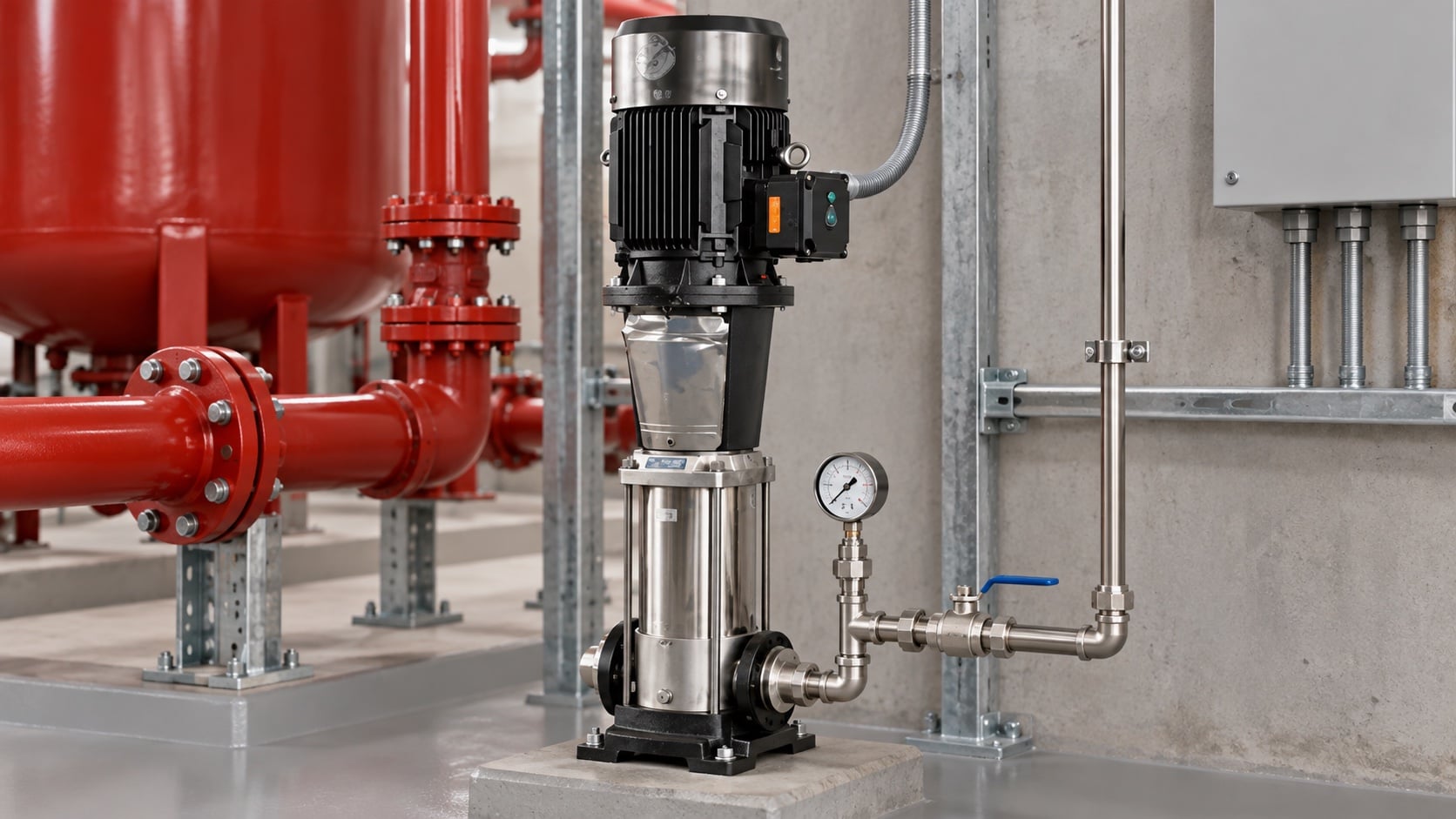
Large networks, tanks, and trapped air affect how quickly pressure changes. System compressibility influences cycling but does not create a universal sizing ratio. Review this condition at normal, test, and credible abnormal states before procurement. Identify the source of every input, the unit used, the operating condition it represents, and the person responsible for approval. If information is preliminary, mark the assumption and test how the decision changes at a conservative boundary. This prevents a neat calculation from hiding an uncertain water level, pressure, valve position, driver condition, or simultaneous demand.
For jockey pump sizing, verify this section against the selected pump curve, the actual site arrangement, manufacturer instructions, and the current requirements accepted by the authority having jurisdiction. Check the installed condition as well as the drawing because pipe routes, elevations, supports, controls, and access often change during construction. Record the result in a form that can be repeated during commissioning and later inspection. Do not change a safety-critical setting or isolate fire protection without the approved impairment and restoration process.
Set the required pressure range
The jockey pump must reach the approved stop pressure while its start point remains above the main fire pump start point in the coordinated sequence. The design team should turn this point into a traceable calculation or drawing note. Identify the source of every input, the unit used, the operating condition it represents, and the person responsible for approval. If information is preliminary, mark the assumption and test how the decision changes at a conservative boundary. This prevents a neat calculation from hiding an uncertain water level, pressure, valve position, driver condition, or simultaneous demand.
For jockey pump sizing, verify this section against the selected pump curve, the actual site arrangement, manufacturer instructions, and the current requirements accepted by the authority having jurisdiction. Check the installed condition as well as the drawing because pipe routes, elevations, supports, controls, and access often change during construction. Record the result in a form that can be repeated during commissioning and later inspection. Do not change a safety-critical setting or isolate fire protection without the approved impairment and restoration process.
Table de décision pratique
| Sizing input | Effect on jockey pump | How to verify |
|---|---|---|
| Normal leakage | Sets required makeup flow | Pressure-decay test and history |
| System volume | Affects pressure-change rate | Drawings and field behavior |
| Target pressure | Sets required head | Approved pressure sequence |
| Courbe caractéristique de pompe | Shows low-flow head capability | Manufacturer curve |
| Check valves | Leakage can cause cycling | Isolation and leak checks |
| Ligne de prise de pression | Controls measured pressure | Field route and valve position |
Check the pump curve
Select against low-flow, high-head operation. Confirm minimum stable operation, shutoff head, motor load, and manufacturer limitations. Treat this as a system condition rather than an isolated component choice. Identify the source of every input, the unit used, the operating condition it represents, and the person responsible for approval. If information is preliminary, mark the assumption and test how the decision changes at a conservative boundary. This prevents a neat calculation from hiding an uncertain water level, pressure, valve position, driver condition, or simultaneous demand.
For jockey pump sizing, verify this section against the selected pump curve, the actual site arrangement, manufacturer instructions, and the current requirements accepted by the authority having jurisdiction. Check the installed condition as well as the drawing because pipe routes, elevations, supports, controls, and access often change during construction. Record the result in a form that can be repeated during commissioning and later inspection. Do not change a safety-critical setting or isolate fire protection without the approved impairment and restoration process.
Limit short cycling
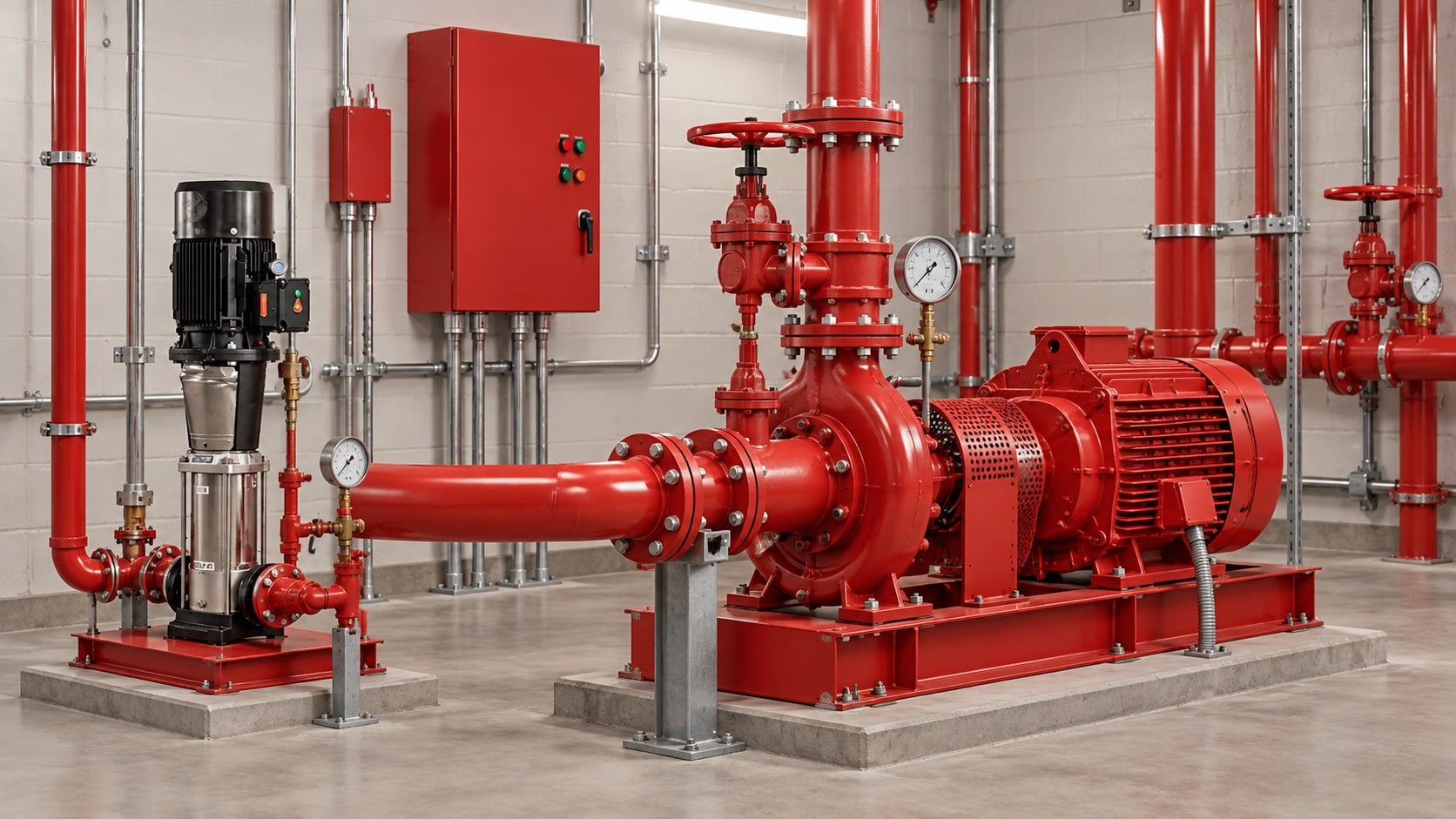
Review check-valve leakage, pressure-tank function where used, sensing line location, system volume, and the gap between start and stop settings. The most useful evidence is measured or approved project data, not a copied rule of thumb. Identify the source of every input, the unit used, the operating condition it represents, and the person responsible for approval. If information is preliminary, mark the assumption and test how the decision changes at a conservative boundary. This prevents a neat calculation from hiding an uncertain water level, pressure, valve position, driver condition, or simultaneous demand.
For jockey pump sizing, verify this section against the selected pump curve, the actual site arrangement, manufacturer instructions, and the current requirements accepted by the authority having jurisdiction. Check the installed condition as well as the drawing because pipe routes, elevations, supports, controls, and access often change during construction. Record the result in a form that can be repeated during commissioning and later inspection. Do not change a safety-critical setting or isolate fire protection without the approved impairment and restoration process.
Coordinate controls and alarms
Keep the sensing line independent and correctly arranged, protect it from blockage or trapped air, and document controller modes and alarm response. Review this condition at normal, test, and credible abnormal states before procurement. Identify the source of every input, the unit used, the operating condition it represents, and the person responsible for approval. If information is preliminary, mark the assumption and test how the decision changes at a conservative boundary. This prevents a neat calculation from hiding an uncertain water level, pressure, valve position, driver condition, or simultaneous demand.
For jockey pump sizing, verify this section against the selected pump curve, the actual site arrangement, manufacturer instructions, and the current requirements accepted by the authority having jurisdiction. Check the installed condition as well as the drawing because pipe routes, elevations, supports, controls, and access often change during construction. Record the result in a form that can be repeated during commissioning and later inspection. Do not change a safety-critical setting or isolate fire protection without the approved impairment and restoration process.
Commission the sequence
Create a controlled small pressure loss, verify jockey start and stop, then create the approved larger demand and verify main pump start without delay. The design team should turn this point into a traceable calculation or drawing note. Identify the source of every input, the unit used, the operating condition it represents, and the person responsible for approval. If information is preliminary, mark the assumption and test how the decision changes at a conservative boundary. This prevents a neat calculation from hiding an uncertain water level, pressure, valve position, driver condition, or simultaneous demand.
For jockey pump sizing, verify this section against the selected pump curve, the actual site arrangement, manufacturer instructions, and the current requirements accepted by the authority having jurisdiction. Check the installed condition as well as the drawing because pipe routes, elevations, supports, controls, and access often change during construction. Record the result in a form that can be repeated during commissioning and later inspection. Do not change a safety-critical setting or isolate fire protection without the approved impairment and restoration process.
Comment cela se rapporte à l'équipement BORRAPUMP
BORRAPUMP fournit des équipements de pompage conçus pour des projets liés à l'eau et à la protection contre l'incendie. Examinez le document pertinent Configuration du produit BORRAPUMP à titre de point de départ, puis soumettez le débit, la charge, la source d'eau, l'entraînement, la puissance, les commandes, les conditions du site, les exigences applicables, la quantité et la destination requis. La sélection finale doit utiliser la base hydraulique du projet et la soumission approuvée ; ce guide ne prétend pas qu'une disposition de catalogue convient à toutes les juridictions ou à tous les risques.
Guides BORRAPUMP associés
- pompes à incendie diesel ou électriques
- sélection d'un groupe motopompe incendie
- Guide d'essai de réception NFPA 20
Références autorisées
Les sources suivantes établissent la limite des normes, le contexte de sécurité incendie et les principes des systèmes de pompes utilisés dans ce guide. Appliquez toujours l'édition et l'adoption locale acceptées pour le projet.
- Page d'élaboration de la norme NFPA 20
- Ressources pour les systèmes de pompes du Département de l'Énergie des États-Unis
- Recherche du NIST sur la protection contre l'incendie
Vidéo éducative
Formation par Practical Engineering : Les pompes créent-elles de la pression ou du débit ?. La vidéo illustre le concept d'ingénierie sous-jacent et ne remplace pas les exigences de protection contre l'incendie spécifiques au projet.
Foire aux questions
Can I size a jockey pump as a percentage of the fire pump?
Do not rely on a percentage alone. Use actual leakage, system pressure behavior, the jockey curve, and approved criteria.
Why does the jockey pump short-cycle?
Possible causes include leakage, check-valve backflow, small system volume, trapped air, pressure-tank problems, or narrow settings.
Should the jockey pump handle sprinkler flow?
No. A fire demand must start the main fire pump according to the approved sequence.
Can an oversized jockey pump delay the main pump?
It can mask a growing demand or create poor control behavior, so size and test the complete sequence.
Liste de contrôle de vérification finale
Avant l'approbation, confirmez la base hydraulique, la condition de la source d'eau, la courbe de pompe sélectionnée, les données du moteur et du contrôleur, les pressions nominales des composants, la disposition des vannes, la méthode d'essai, l'accès, le drainage, les alarmes et la procédure de restauration. Résolvez les différences entre les plans et le système installé. Pendant la mise en service, utilisez des instruments étalonnés et enregistrez la pression d'aspiration, la pression de refoulement, le débit, la vitesse, l'état du moteur, les alarmes et les observations anormales à chaque point requis. Conservez les résultats acceptés avec les registres de la salle des pompes afin que les inspections ultérieures comparent des éléments comparables.