
Size a jockey pump to replace normal system leakage and small pressure losses without meeting sprinkler or hose demand and without repeatedly starting the main fire pump. Determine realistic leakage, system volume and pressure behavior, required pressure, acceptable run time, and the coordinated start-stop sequence. Select a small pump whose curve can reach the intended stop pressure at low flow, then verify that a genuine fire demand produces enough pressure decay to start the main fire pump. Keep the calculation and acceptance record with the final project documents so future tests use the same basis.
Güvenlik ve kapsam: Yangın pompaları ve tahrik üniteleri can güvenliği ekipmanıdır. Hidrolik, elektriksel, dizel, yakıt, akü, basınç, döner ekipman, test ve arıza/devre dışı bırakma çalışmaları; yürürlükteki onaylı tasarıma, üretici talimatlarına, geçerli standartlara ve yetkili merciye uygun olmalıdır. Bu kılavuz mühendislik karar yolunu açıklar; saha değişikliklerini, bypass işlemlerini veya yetkisiz personel tarafından çalıştırılmayı yetkilendirmez.
Define the jockey pump's job
It maintains normal system pressure after small losses. It is not a substitute for the main fire pump and should not mask material leakage. Treat this as a system condition rather than an isolated component choice. Identify the source of every input, the unit used, the operating condition it represents, and the person responsible for approval. If information is preliminary, mark the assumption and test how the decision changes at a conservative boundary. This prevents a neat calculation from hiding an uncertain water level, pressure, valve position, driver condition, or simultaneous demand.
For jockey pump sizing, verify this section against the selected pump curve, the actual site arrangement, manufacturer instructions, and the current requirements accepted by the authority having jurisdiction. Check the installed condition as well as the drawing because pipe routes, elevations, supports, controls, and access often change during construction. Record the result in a form that can be repeated during commissioning and later inspection. Do not change a safety-critical setting or isolate fire protection without the approved impairment and restoration process.
Estimate normal leakage
Use maintenance history, measured pressure decay, known valve and device leakage, and system condition. Investigate abnormal leakage instead of permanently oversizing the jockey pump. The most useful evidence is measured or approved project data, not a copied rule of thumb. Identify the source of every input, the unit used, the operating condition it represents, and the person responsible for approval. If information is preliminary, mark the assumption and test how the decision changes at a conservative boundary. This prevents a neat calculation from hiding an uncertain water level, pressure, valve position, driver condition, or simultaneous demand.
For jockey pump sizing, verify this section against the selected pump curve, the actual site arrangement, manufacturer instructions, and the current requirements accepted by the authority having jurisdiction. Check the installed condition as well as the drawing because pipe routes, elevations, supports, controls, and access often change during construction. Record the result in a form that can be repeated during commissioning and later inspection. Do not change a safety-critical setting or isolate fire protection without the approved impairment and restoration process.
Understand system volume
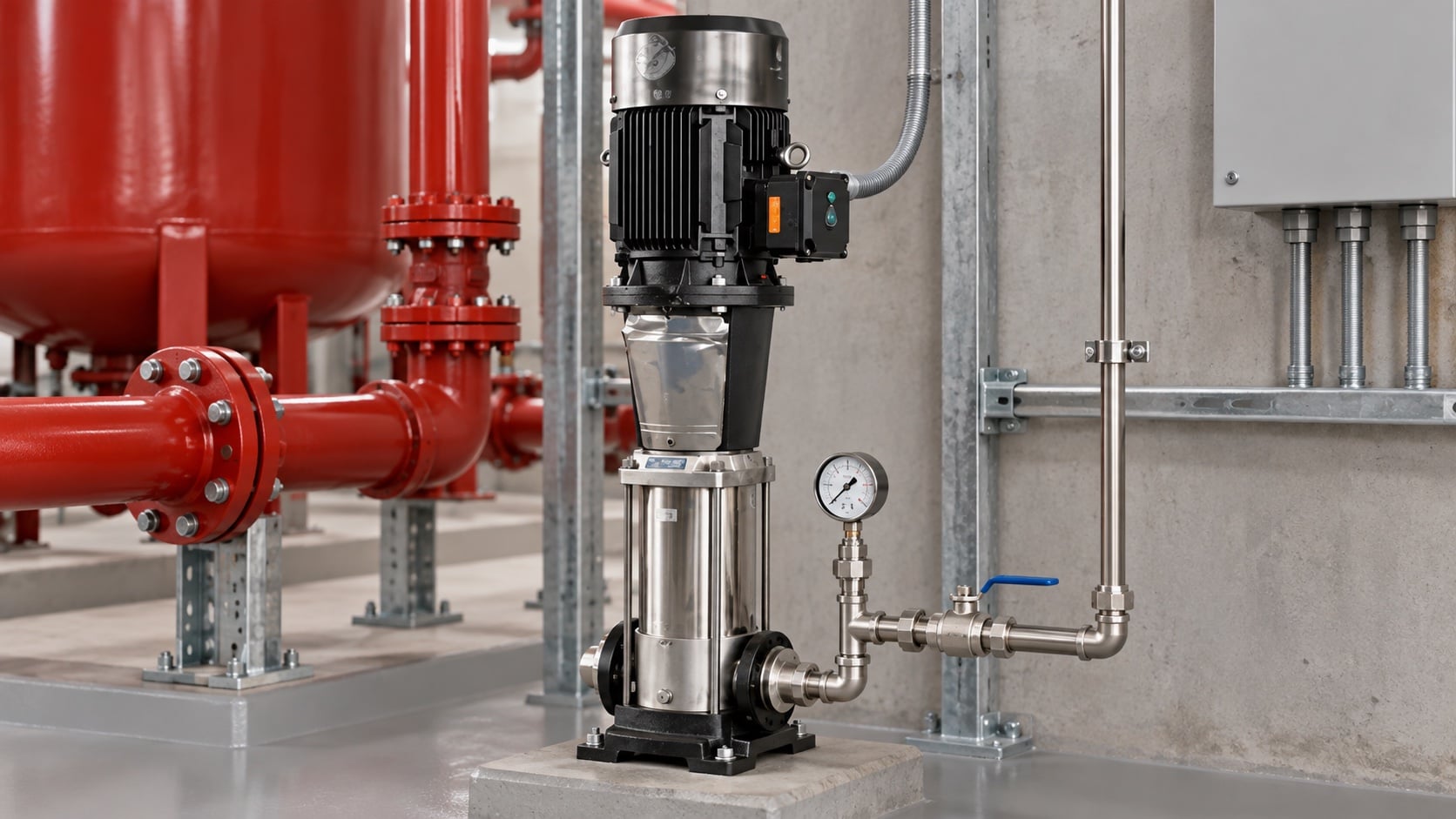
Large networks, tanks, and trapped air affect how quickly pressure changes. System compressibility influences cycling but does not create a universal sizing ratio. Review this condition at normal, test, and credible abnormal states before procurement. Identify the source of every input, the unit used, the operating condition it represents, and the person responsible for approval. If information is preliminary, mark the assumption and test how the decision changes at a conservative boundary. This prevents a neat calculation from hiding an uncertain water level, pressure, valve position, driver condition, or simultaneous demand.
For jockey pump sizing, verify this section against the selected pump curve, the actual site arrangement, manufacturer instructions, and the current requirements accepted by the authority having jurisdiction. Check the installed condition as well as the drawing because pipe routes, elevations, supports, controls, and access often change during construction. Record the result in a form that can be repeated during commissioning and later inspection. Do not change a safety-critical setting or isolate fire protection without the approved impairment and restoration process.
Set the required pressure range
The jockey pump must reach the approved stop pressure while its start point remains above the main fire pump start point in the coordinated sequence. The design team should turn this point into a traceable calculation or drawing note. Identify the source of every input, the unit used, the operating condition it represents, and the person responsible for approval. If information is preliminary, mark the assumption and test how the decision changes at a conservative boundary. This prevents a neat calculation from hiding an uncertain water level, pressure, valve position, driver condition, or simultaneous demand.
For jockey pump sizing, verify this section against the selected pump curve, the actual site arrangement, manufacturer instructions, and the current requirements accepted by the authority having jurisdiction. Check the installed condition as well as the drawing because pipe routes, elevations, supports, controls, and access often change during construction. Record the result in a form that can be repeated during commissioning and later inspection. Do not change a safety-critical setting or isolate fire protection without the approved impairment and restoration process.
Pratik karar tablosu
| Sizing input | Effect on jockey pump | How to verify |
|---|---|---|
| Normal leakage | Sets required makeup flow | Pressure-decay test and history |
| System volume | Affects pressure-change rate | Drawings and field behavior |
| Target pressure | Sets required head | Approved pressure sequence |
| Pompaya ait karakteristik eğri | Shows low-flow head capability | Manufacturer curve |
| Check valves | Leakage can cause cycling | Isolation and leak checks |
| Algılama hattı | Controls measured pressure | Field route and valve position |
Check the pump curve
Select against low-flow, high-head operation. Confirm minimum stable operation, shutoff head, motor load, and manufacturer limitations. Treat this as a system condition rather than an isolated component choice. Identify the source of every input, the unit used, the operating condition it represents, and the person responsible for approval. If information is preliminary, mark the assumption and test how the decision changes at a conservative boundary. This prevents a neat calculation from hiding an uncertain water level, pressure, valve position, driver condition, or simultaneous demand.
For jockey pump sizing, verify this section against the selected pump curve, the actual site arrangement, manufacturer instructions, and the current requirements accepted by the authority having jurisdiction. Check the installed condition as well as the drawing because pipe routes, elevations, supports, controls, and access often change during construction. Record the result in a form that can be repeated during commissioning and later inspection. Do not change a safety-critical setting or isolate fire protection without the approved impairment and restoration process.
Limit short cycling
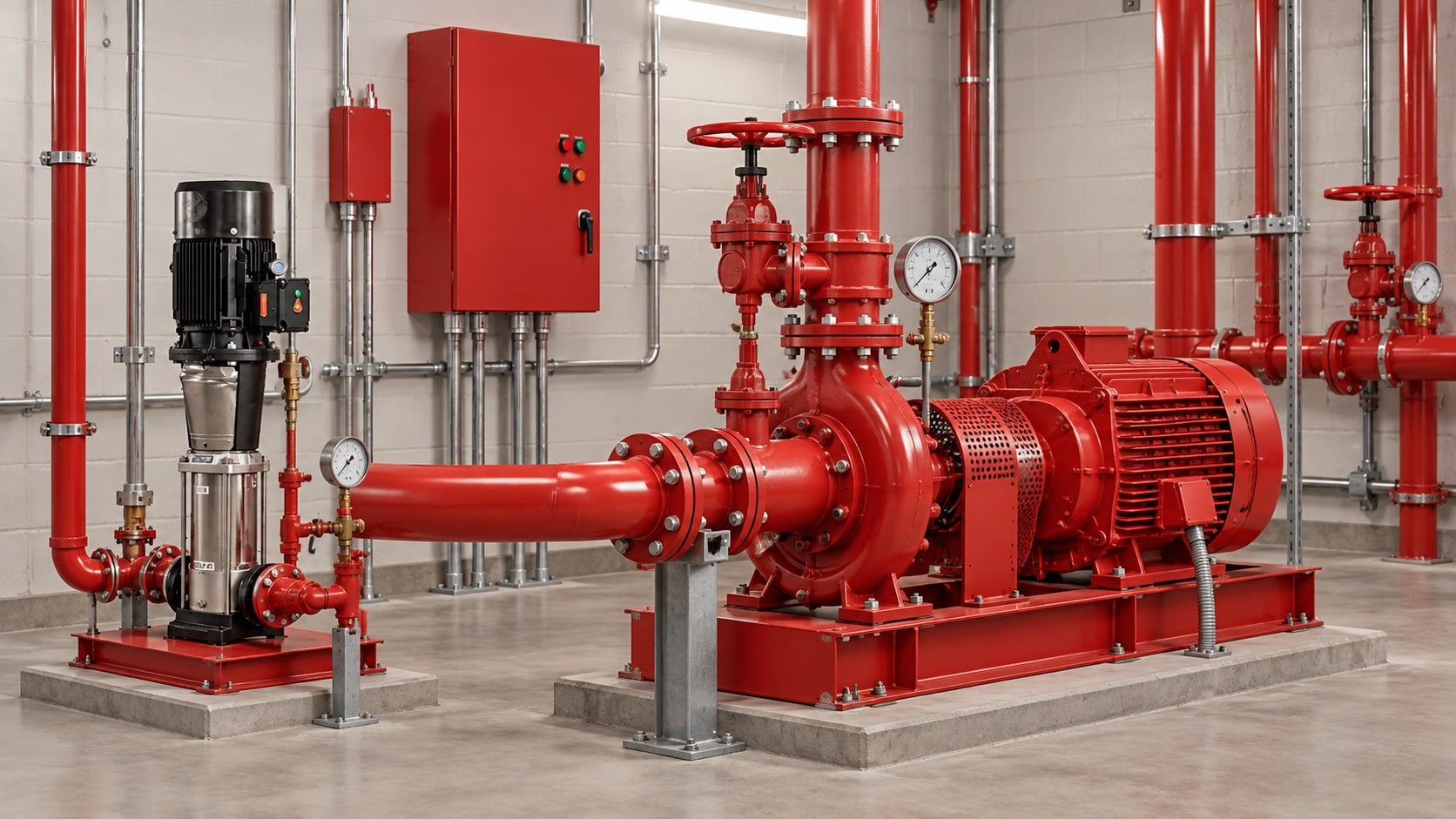
Review check-valve leakage, pressure-tank function where used, sensing line location, system volume, and the gap between start and stop settings. The most useful evidence is measured or approved project data, not a copied rule of thumb. Identify the source of every input, the unit used, the operating condition it represents, and the person responsible for approval. If information is preliminary, mark the assumption and test how the decision changes at a conservative boundary. This prevents a neat calculation from hiding an uncertain water level, pressure, valve position, driver condition, or simultaneous demand.
For jockey pump sizing, verify this section against the selected pump curve, the actual site arrangement, manufacturer instructions, and the current requirements accepted by the authority having jurisdiction. Check the installed condition as well as the drawing because pipe routes, elevations, supports, controls, and access often change during construction. Record the result in a form that can be repeated during commissioning and later inspection. Do not change a safety-critical setting or isolate fire protection without the approved impairment and restoration process.
Coordinate controls and alarms
Keep the sensing line independent and correctly arranged, protect it from blockage or trapped air, and document controller modes and alarm response. Review this condition at normal, test, and credible abnormal states before procurement. Identify the source of every input, the unit used, the operating condition it represents, and the person responsible for approval. If information is preliminary, mark the assumption and test how the decision changes at a conservative boundary. This prevents a neat calculation from hiding an uncertain water level, pressure, valve position, driver condition, or simultaneous demand.
For jockey pump sizing, verify this section against the selected pump curve, the actual site arrangement, manufacturer instructions, and the current requirements accepted by the authority having jurisdiction. Check the installed condition as well as the drawing because pipe routes, elevations, supports, controls, and access often change during construction. Record the result in a form that can be repeated during commissioning and later inspection. Do not change a safety-critical setting or isolate fire protection without the approved impairment and restoration process.
Commission the sequence
Create a controlled small pressure loss, verify jockey start and stop, then create the approved larger demand and verify main pump start without delay. The design team should turn this point into a traceable calculation or drawing note. Identify the source of every input, the unit used, the operating condition it represents, and the person responsible for approval. If information is preliminary, mark the assumption and test how the decision changes at a conservative boundary. This prevents a neat calculation from hiding an uncertain water level, pressure, valve position, driver condition, or simultaneous demand.
For jockey pump sizing, verify this section against the selected pump curve, the actual site arrangement, manufacturer instructions, and the current requirements accepted by the authority having jurisdiction. Check the installed condition as well as the drawing because pipe routes, elevations, supports, controls, and access often change during construction. Record the result in a form that can be repeated during commissioning and later inspection. Do not change a safety-critical setting or isolate fire protection without the approved impairment and restoration process.
Bunun BORRAPUMP ekipmanıyla nasıl ilişkili olduğu
BORRAPUMP, su ve yangından korunma projeleri için mühendislik ürünü pompalama ekipmanları tedarik etmektedir. İlgili konuyu inceleyin. BORRAPUMP ürün konfigürasyonu Başlangıç noktası olarak gerekli debiyi, basma yüksekliğini, su kaynağını, sürücüyü, gücü, kumandaları, saha koşullarını, geçerli gereksinimleri, miktarı ve varış yerini iletin. Nihai seçim proje hidrolik temelini ve onaylı alt malzemeyi kullanmalıdır; bu kılavuz, hiçbir katalog düzenlemesinin her yargı bölgesine veya risk durumuna uyduğunu iddia etmez.
İlgili BORRAPUMP kılavuzları
Yetkin kaynaklar
Aşağıdaki kaynaklar, bu kılavuzda kullanılan standart sınırını, yangın güvenliği bağlamını ve pompa sistemi ilkelerini belirler. Proje için kabul edilen baskıyı ve yerel uyarlamayı her zaman uygulayın.
- NFPA 20 standart geliştirme sayfası
- ABD Enerji Bakanlığı pompalama sistemi kaynakları
- NIST yangın koruma araştırması
Eğitici video
Pratical Engineering'in eğitim geçmişi: Pompalar Basınç mı Yoksa Akış mı Oluşturur?. Video, temel mühendislik konseptini desteklemekte olup projeye özel yangından korunma gerekliliklerinin yerine geçmez.
Sık sorulan sorular
Can I size a jockey pump as a percentage of the fire pump?
Do not rely on a percentage alone. Use actual leakage, system pressure behavior, the jockey curve, and approved criteria.
Why does the jockey pump short-cycle?
Possible causes include leakage, check-valve backflow, small system volume, trapped air, pressure-tank problems, or narrow settings.
Should the jockey pump handle sprinkler flow?
No. A fire demand must start the main fire pump according to the approved sequence.
Can an oversized jockey pump delay the main pump?
It can mask a growing demand or create poor control behavior, so size and test the complete sequence.
Son doğrulama kontrol listesi
Onaydan önce hidrolik temeli, su kaynağı koşulunu, seçilen pompa eğrisini, sürücü ve kontrolcü verilerini, bileşen basınç sınıflarını, vana düzenini, test yöntemini, erişimi, drenajı, alarmları ve eski haline getirme prosedürünü onaylayın. Projeler ile kurulan sistem arasındaki farkları giderin. Devreye alma sırasında kalibre edilmiş cihazlar kullanın ve gerekli her noktada emme basıncını, basma basıncını, debiyi, hızı, sürücü durumunu, alarmları ve anormal gözlemleri kaydedin. Sonraki denetimlerin benzeri benzeriyle karşılaştırabilmesi için kabul edilen sonuçları pompa odası kayıtlarıyla birlikte saklayın.