
A pump for septic tank service must be selected from the liquid and the chamber duty, not from horsepower alone. First identify whether the pump moves clarified effluent, screened wastewater, or raw sewage containing solids. Then define design flow, total dynamic head, solids size, chamber dimensions, minimum and maximum liquid levels, starts per hour, discharge piping, check valve, alarm, electrical supply, and access for removal. Effluent, sewage, grinder, and ordinary sump pumps are not interchangeable. The final pump and control arrangement must match the septic-system designer's documents, local health requirements, and the manufacturer's published operating limits.
Hướng dẫn này là một khung kỹ thuật và mua sắm ban đầu, không phải là sự thay thế cho thiết kế dự án đã được phê duyệt, các quy định hiện hành, hướng dẫn của nhà sản xuất, hoặc sự giám sát có trình độ tại công trường. Công việc điện, kiểm tra khi có điện, cẩu nâng, làm việc trong không gian hạn chế, công việc phòng cháy chữa cháy, đào đất, chất lỏng nguy hiểm, nước thải, và các hệ thống có áp suất đòi hỏi các quy trình cụ thể theo công việc và nhân sự có năng lực. Duy trì bảo vệ tự động và tình trạng sẵn sàng của hệ thống trong khi điều tra sự cố. Nếu chất lỏng thực tế, chế độ vận hành, điều kiện công trường hoặc yêu cầu quản lý khác với các giả định, hãy dừng lại và nhận đánh giá kỹ thuật đã được sửa đổi.
Identify what the pump will actually handle
A septic system may place a pump after the primary tank, in a separate dosing chamber, or in a sewage collection basin. Liquid leaving a properly functioning septic tank can still carry suspended solids, grease, fibers, and corrosive gases. A pump moving clarified effluent normally faces a different solids duty from a pump receiving raw sewage. Ask for a process sketch that shows every chamber, screen, baffle, filter, inlet, overflow, and discharge destination. Record the largest expected solids and whether wipes, rags, grit, or fibrous material can enter. Do not choose a grinder pump merely because the word septic appears in the request; grinding changes maintenance, controls, and downstream assumptions. Likewise, a small sump pump intended for clean drainage is not automatically suitable for wastewater. The liquid description should be written into the request for quotation so every supplier evaluates the same service.
Tính toán lưu lượng và tổng cột áp động
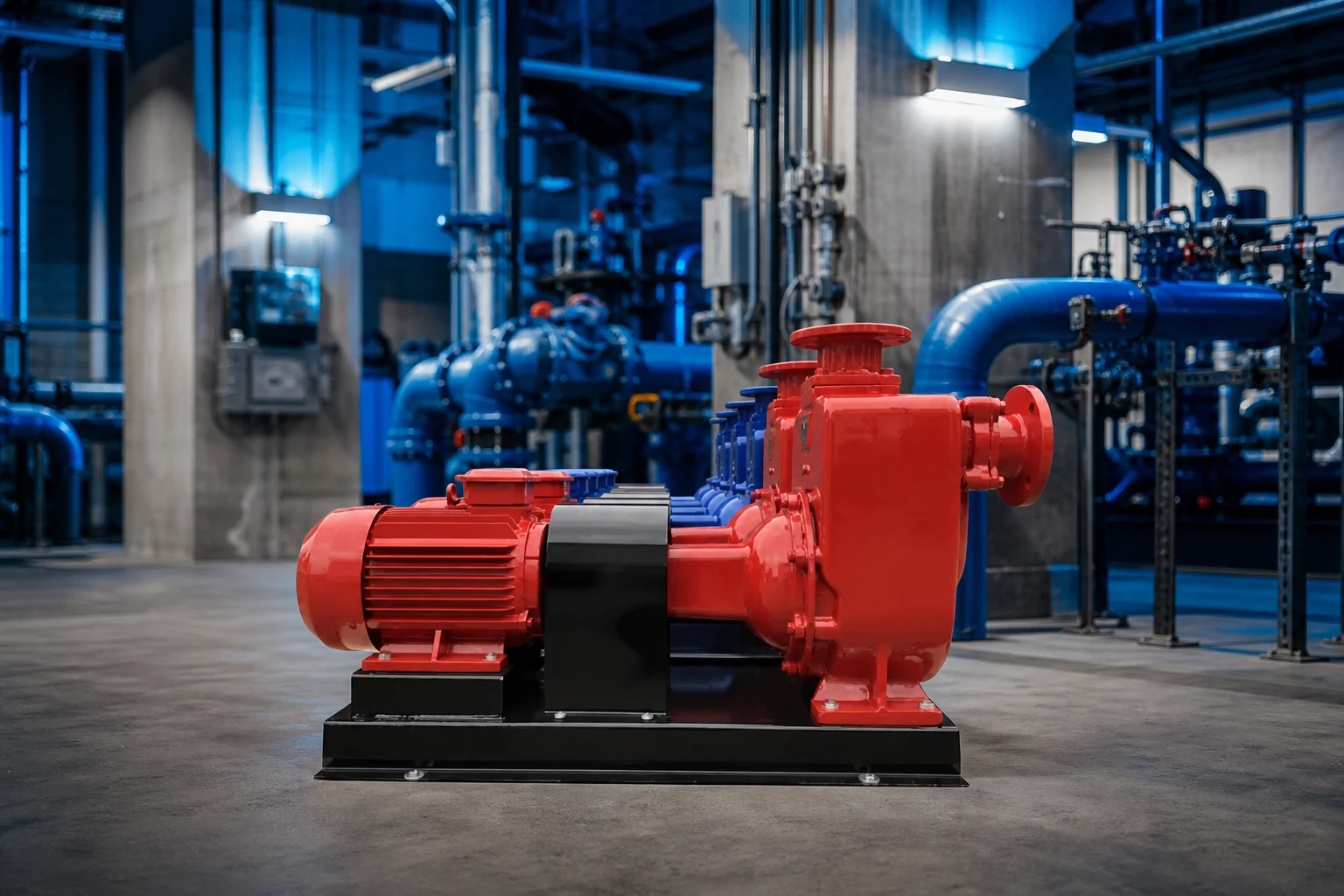
Flow should follow the dosing requirement, inflow pattern, storage volume, and permissible operating cycle. Total dynamic head combines vertical rise from the operating liquid level to the discharge point, required pressure at the destination, and friction through pipe, fittings, check valves, isolation valves, filters, and force mains. Calculate friction at the proposed flow and pipe inside diameter rather than copying a nominal pipe size. Check both the normal start level and the lowest operating level because the static component changes as the chamber is pumped down. Plot the resulting duty point on the certified pump curve and review the whole expected range. A pump that empties the chamber too quickly may cycle excessively; one that is too small may allow the level to rise during peak inflow. The designer should also check emergency storage and the response time after a high-level alarm.
Match solids passage, hydraulics, and motor load
Compare the pump's published solids passage and hydraulic design with the actual waste stream. Vortex, channel, cutter, and grinder arrangements behave differently and should be selected from evidence, not from a generic preference. Review the curve, efficiency, absorbed power, shutoff head, minimum recommended flow, and motor loading at every credible operating point. The discharge pipe and check valve must not create a passage smaller than the project intends to handle. Confirm whether the motor depends on surrounding liquid for cooling and whether the low-level control preserves the required submergence. Frequent starts can heat the motor and shorten contactor life, so chamber volume and level spacing matter. Where two pumps are required, define duty, assist, standby, alternation, and failure behavior instead of simply listing two identical units.
Bảng quyết định dự án
| Đầu vào quyết định | What to confirm | Selection consequence |
|---|---|---|
| Liquid stage | Effluent, screened wastewater, or raw sewage | Defines hydraulic passage and pump type |
| Design flow | Dose, peak inflow, storage and cycle limits | Sets curve duty and chamber drawdown |
| Total dynamic head | Static lift, pressure and friction | Sets required pump head |
| Solids and fibers | Maximum size and actual waste stream | Sets passage, impeller or grinding need |
| Level spacing | Off, lead, lag and high alarm elevations | Controls submergence and starts per hour |
| Maintenance access | Guide rails, lifting and isolation | Allows removal without tank entry |
Design controls, alarms, and level settings
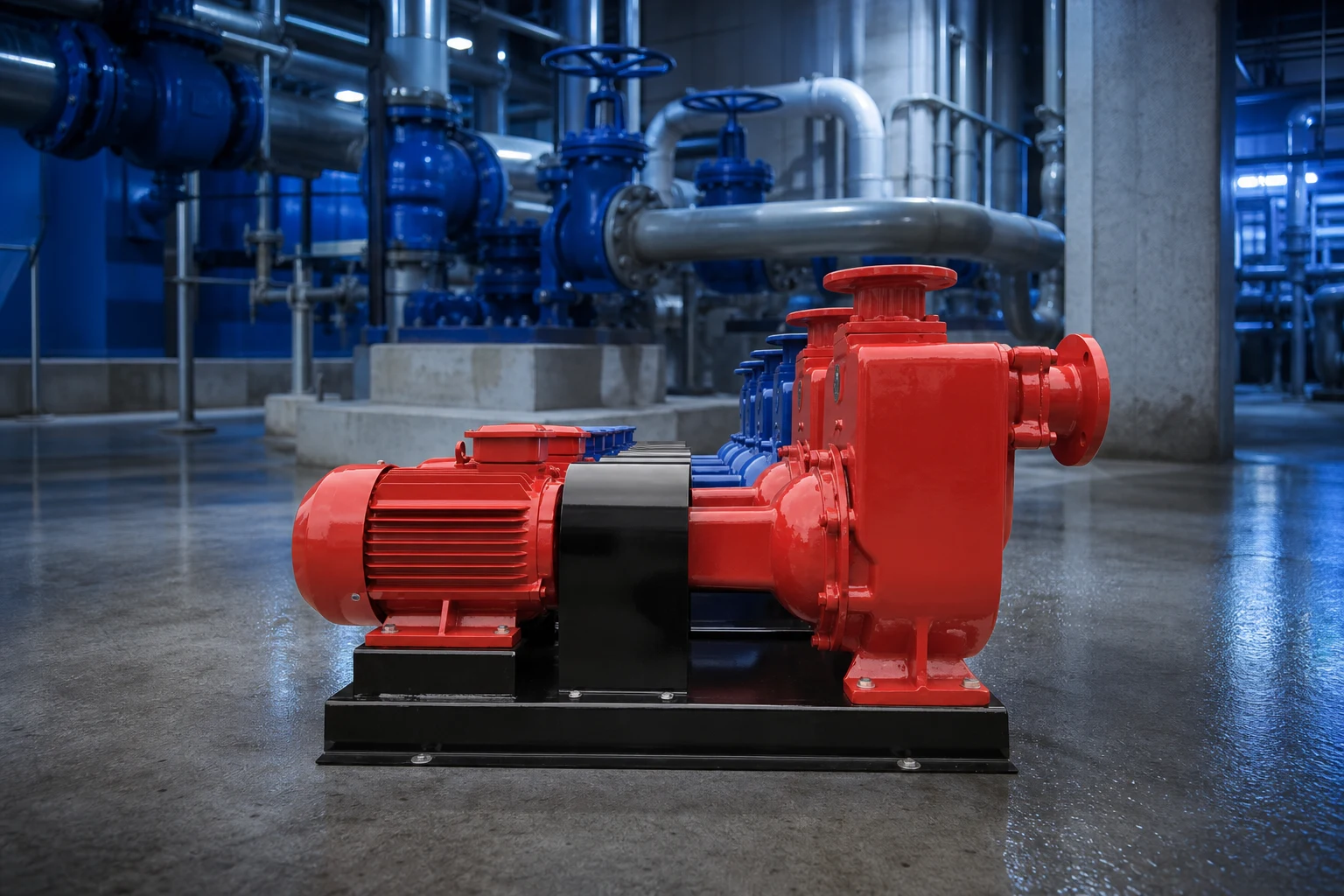
A workable control sequence normally separates pump-on, pump-off, high-level alarm, and any redundant shutdown or backup level. Floats need enough clearance to move without fouling on cables, pipework, walls, grease, or turbulence. Alternative level sensors also require installation and maintenance provisions. State whether the controller alternates pumps, starts the second pump on high inflow, records runtime and starts, reports overload, or sends a remote alarm. The alarm circuit should remain effective when the normal pump circuit fails, subject to the approved electrical design. Verify phase, voltage, overload protection, cable length, junction location, sealing, grounding, and the suitability of every component for the environment. Never enter a tank or chamber to adjust a control without an approved confined-space procedure and qualified personnel.
Plan piping, access, and safe maintenance
Provide an isolation valve, suitable check valve, union or guide-rail arrangement, lifting chain or rated lifting device, and enough access to remove the pump without entering the chamber. Support discharge piping so the pump does not carry pipe loads. Route cables separately from lifting equipment and protect penetrations against leakage and gas migration as required by the design. The cover must control unauthorized access while allowing inspection and removal. Locate the chamber where service vehicles and technicians can work without traffic, fall, or electrical hazards. Ventilation, gas testing, fall protection, lockout, sanitation, and confined-space controls are site responsibilities. A supplier drawing should show chamber diameter, rail position, discharge connection, valves, level devices, cable route, and minimum removal clearance before concrete or piping is finalized.
Commission the pump as a complete system
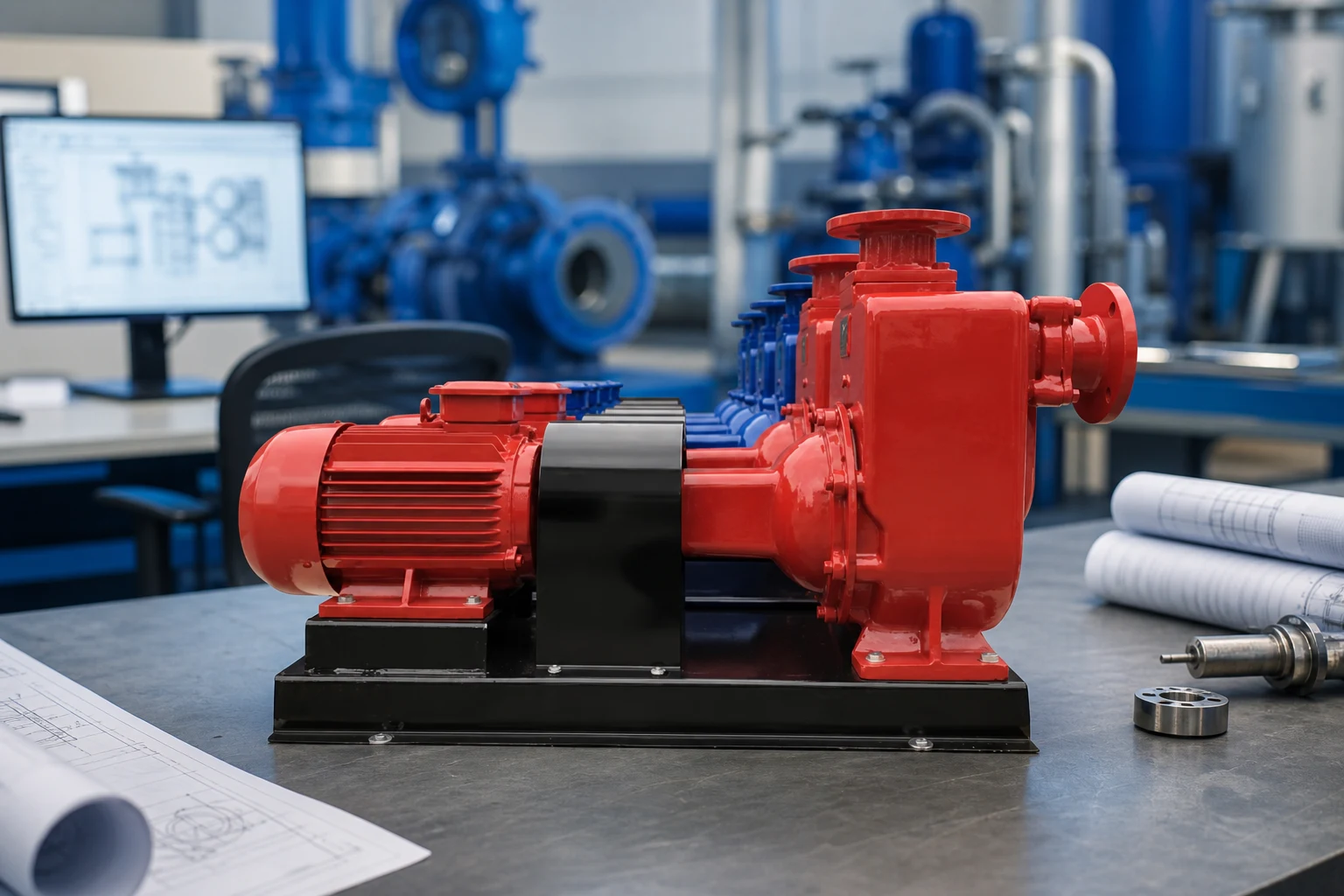
Before commissioning, remove construction debris, verify free movement of level devices, inspect valves and piping, test insulation and continuity using approved procedures, confirm rotation where applicable, and check the controller logic without bypassing protection. Run clean-water or approved functional tests when the project procedure allows, then observe actual operation at representative levels. Record start and stop elevations, drawdown time, estimated flow, discharge pressure where available, motor current, voltage, alarm operation, pump alternation, check-valve closure, leaks, vibration, and abnormal noise. Confirm that the downstream system accepts the discharge. Establish a baseline of runtime and starts so future changes reveal infiltration, blockage, wear, or control drift. Commissioning is incomplete if the pump runs but the high-level alarm, standby sequence, or safe removal arrangement has not been demonstrated.
Biên bản so sánh và nghiệm thu nhà cung cấp
Một bảng so sánh nhà cung cấp hoàn chỉnh nên sử dụng một bảng dữ liệu chung. Hãy đặt các điểm làm việc thiết kế và thay thế, chất lỏng, nhiệt độ, hàm lượng chất rắn, độ cao địa điểm, công suất, hệ thống điều khiển, lắp đặt, số giờ vận hành, số lượng, điểm đến và các tài liệu bắt buộc ở phần đầu. Chuẩn hóa các khác biệt về phạm vi trước khi so sánh giá cả hoặc hiệu suất. Yêu cầu đường cong đặc tính được chứng nhận hoặc dữ liệu năng suất, công suất tiêu thụ, giới hạn vận hành, vật liệu, kích thước, trọng lượng, các kết nối, động cơ hoặc thiết bị truyền động, bộ điều khiển, phụ kiện, các bài kiểm tra, phương pháp bảo quản, phụ tùng thay thế, hướng dẫn lắp đặt và ranh giới bảo hành. Ghi lại mọi sai lệch và giả định chưa được giải quyết. Trong quá trình đánh giá kỹ thuật, hãy truy xuất nguồn gốc của từng tính năng được chào giá về một đầu vào của dự án thay vì cộng điểm cho các tính năng mà điều kiện làm việc không cần đến. Trong quá trình chạy thử, hãy đo đạc các biến số giống như đã dùng cho việc lựa chọn thiết bị để kết quả lắp đặt thực tế có thể so sánh được với cơ sở ban đầu. Nếu các điều kiện hiện trường khác nhau, hãy cập nhật tính toán và nhận được sự phê duyệt có thẩm quyền trước khi thay đổi thiết bị hoặc các cài đặt bảo vệ.
Tích hợp hệ thống và lập kế hoạch vòng đời
Coi máy bơm là một thành phần của một hệ thống thủy lực và điều khiển hoàn chỉnh. Xem xét nguồn cấp, đường hút, bố trí cửa hút hoặc cửa vào, máy bơm, động cơ, đường ống xả, van, thiết bị đo đạc, hệ thống điều khiển, nguồn điện, hệ thống thoát nước, móng máy, tuyến đường cẩu lắp và hệ thống tiếp nhận trên cùng một bản vẽ. Xác nhận quá trình vận hành bình thường, nhu cầu tối thiểu và tối đa, khởi động, dừng máy, các đường dẫn bị chặn hoặc đóng, mất điện, chuyển đổi dự phòng, phản ứng báo động, làm sạch và cách ly bảo trì. Các điểm kết nối gây ra nhiều sự cố: một máy bơm được lựa chọn chính xác vẫn có thể hoạt động kém hiệu quả do nguồn cấp thực tế khác với mức giả định, một đoạn ống nhỏ hơn thiết kế, một van bị tổn thất áp suất bất ngờ, một bộ điều khiển sử dụng sai vị trí cảm biến, hoặc lối tiếp cận bảo trì bị cắt bỏ trong quá trình thiết kế phần xây dựng. Giải quyết trách nhiệm về các điểm kết nối trước khi mua hàng. Nhà cung cấp máy bơm không thể phê duyệt nhà ở, giếng khoan, quy trình xử lý nước thải, hệ thống phòng cháy chữa cháy, xả thải môi trường hoặc hệ thống lắp đặt điện trừ khi trách nhiệm đó được bao gồm rõ ràng và được hỗ trợ bằng việc đánh giá chuyên môn.
Việc lập kế hoạch vòng đời phải bắt đầu trước khi vận chuyển và tiếp tục xuyên suốt mọi thay đổi vận hành được ghi chép lại. Xác định số giờ vận hành dự kiến, số lần khởi động, thời gian chờ, điều kiện bảo quản, tuyến đường kiểm tra, phương pháp tháo dỡ, năng lực nâng hạ, yêu cầu vệ sinh, vật tư tiêu hao, phụ tùng thay thế quan trọng, dụng cụ dịch vụ và dữ liệu mà người vận hành sẽ theo dõi xu hướng. Thiết lập các giá trị đọc cơ sở trong quá trình nghiệm thu và giữ chúng cùng với đường cong đặc tính, bảng dữ liệu, bản vẽ, cài đặt bộ điều khiển, chứng chỉ, sách hướng dẫn và danh sách bộ phận. Một kỹ thuật viên trong tương lai phải có thể biết được chế độ làm việc nào đã được phê duyệt, cái gì đã được đo lường khi khởi động và cái gì đã thay đổi. Khi hiệu suất suy giảm, hãy so sánh các bằng chứng trước khi thay thế thiết bị. Lưu lượng, áp suất, mức, dòng điện, công suất, độ rung, nhiệt độ, thời gian chạy, số lần khởi động, cảnh báo và tình trạng chất lỏng thường giúp phân biệt các nguyên nhân do thủy lực, cơ khí, điện và công trình. Hồ sơ này giúp giảm thiểu việc thay thế không cần thiết và hỗ trợ đưa ra quyết định an toàn hơn khi các điều kiện vận hành không còn phù hợp với lựa chọn ban đầu.
Chủ đề này liên quan đến thiết bị BORRAPUMP như thế nào
Hướng dẫn này hỗ trợ việc đánh giá sớm pump for septic tank tuyến ứng dụng. Nó không gán một mô hình cuối cùng hay khẳng định rằng một cấu hình chuẩn phù hợp cho mọi dự án. Hãy gửi các điểm công tác, dữ liệu chất lỏng, bản vẽ mặt bằng, nguồn điện, hệ thống điều khiển, số lượng, điểm đến, các phê duyệt cần thiết và phạm vi kiểm tra để sản phẩm đề xuất có thể được kiểm tra đối với dịch vụ thực tế.
Các hướng dẫn kỹ thuật liên quan đến BORRAPUMP
Các nguồn uy tín và tài liệu học tập nâng cao
Hệ thống tự hoại của EPA Hoa Kỳ; OSHA permit-required confined spaces; OSHA electrical safety-related work practices. Các nguồn này cung cấp bối cảnh chung về an toàn, môi trường hoặc kỹ thuật. Các quy tắc hiện được thông qua, phê duyệt dự án và hướng dẫn thiết bị vẫn giữ nguyên giá trị quyết định.
Video giáo dục của Practical Engineering: Máy bơm tạo ra áp suất hay lưu lượng?. Nó giải thích các nguyên tắc nền tảng và không thay thế các hướng dẫn dành riêng cho dự án.
Các câu hỏi thường gặp
Can a sump pump be used in a septic tank?
Only if its manufacturer and the system designer approve it for the actual liquid, solids, head, duty cycle, environment, and controls. A clean-water sump pump is not automatically a sewage or effluent pump.
What size septic pump do I need?
Size from required flow, total dynamic head, solids duty, chamber volume, cycle limits, and the certified pump curve. Horsepower alone is not a sizing method.
Is a grinder pump always better?
No. A grinder is useful only where the approved system requires size reduction. It adds different maintenance and downstream considerations.
Why does the high-level alarm need separate attention?
The alarm must warn of a rising level when normal pumping is unavailable. Its power, sensor, notification path, and test procedure should be defined and verified.
Mốc kiểm tra dự án cuối khóa
Trước khi đặt hàng hoặc thay đổi hiện trường, hãy đối chiếu các thông số kỹ thuật và bản vẽ đã được phê duyệt với dữ liệu của nhà供应商, vật liệu, kích thước, trọng lượng, kết nối, bộ điều khiển, thiết bị điều khiển, phụ kiện, bảo vệ, phạm vi kiểm tra, tài liệu, phụ tùng thay thế, phương pháp lắp đặt, khả năng tiếp cận để bảo trì và các yêu cầu về điểm đến. Ghi lại các giả định còn lại và phân công trách nhiệm để giải quyết chúng. Thông tin được chấp nhận cuối cùng phải là cơ sở được sử dụng cho việc lắp đặt, chạy thử và bảo trì trong tương lai.