
Calculate fire pump flow and pressure from the approved fire-protection hydraulic demand, the available water-supply curve, elevation, pipe friction, and the residual pressure required at the controlling point. Do not select the pump by floor area, pipe diameter, or a guessed pressure alone. The required duty point must sit on a documented pump curve and the complete system must be checked at no-flow, rated-flow, and higher-flow conditions required by the governing project criteria. Keep the calculation and acceptance record with the final project documents so future tests use the same basis.
السلام والنشاط: مضخات الحريق ومحركاتها هي معدات للسلامة في الحياة. يجب أن تتوافق أعمال الأنظمة الهيدروليكية، والكهربائية، والديزل، والوقود، والبطاريات، والضغط، والمعدات الدوارة، والاختبار، وتعطيل الأنظمة مع التصميم الحالي المعتمد، وتتعليمات الشركة المصنعة، والمعايير المطبقة، والجهة المختصة ذات الصلاحية. يوضح هذا الدليل مسار القرار الهندسي؛ ولا يمنح الإذن بإجراء تعديلات ميدانية، أو تجاوزات، أو تشغيل بواسطة أشخاص غير مؤهلين.
Start with the approved system demand
Use the hydraulic calculation for the most demanding sprinkler, standpipe, hydrant, foam, or combined scenario. Record flow, residual pressure, hose demand, duration, and which simultaneous systems are included. Treat this as a system condition rather than an isolated component choice. Identify the source of every input, the unit used, the operating condition it represents, and the person responsible for approval. If information is preliminary, mark the assumption and test how the decision changes at a conservative boundary. This prevents a neat calculation from hiding an uncertain water level, pressure, valve position, driver condition, or simultaneous demand.
For fire pump flow calculation, verify this section against the selected pump curve, the actual site arrangement, manufacturer instructions, and the current requirements accepted by the authority having jurisdiction. Check the installed condition as well as the drawing because pipe routes, elevations, supports, controls, and access often change during construction. Record the result in a form that can be repeated during commissioning and later inspection. Do not change a safety-critical setting or isolate fire protection without the approved impairment and restoration process.
Separate source pressure from pump pressure
Plot the reliable water-supply curve at the pump suction. Use the conservative available pressure at the selected flow and account for tank level, municipal variation, and suction-side losses. The most useful evidence is measured or approved project data, not a copied rule of thumb. Identify the source of every input, the unit used, the operating condition it represents, and the person responsible for approval. If information is preliminary, mark the assumption and test how the decision changes at a conservative boundary. This prevents a neat calculation from hiding an uncertain water level, pressure, valve position, driver condition, or simultaneous demand.
For fire pump flow calculation, verify this section against the selected pump curve, the actual site arrangement, manufacturer instructions, and the current requirements accepted by the authority having jurisdiction. Check the installed condition as well as the drawing because pipe routes, elevations, supports, controls, and access often change during construction. Record the result in a form that can be repeated during commissioning and later inspection. Do not change a safety-critical setting or isolate fire protection without the approved impairment and restoration process.
Calculate total dynamic head
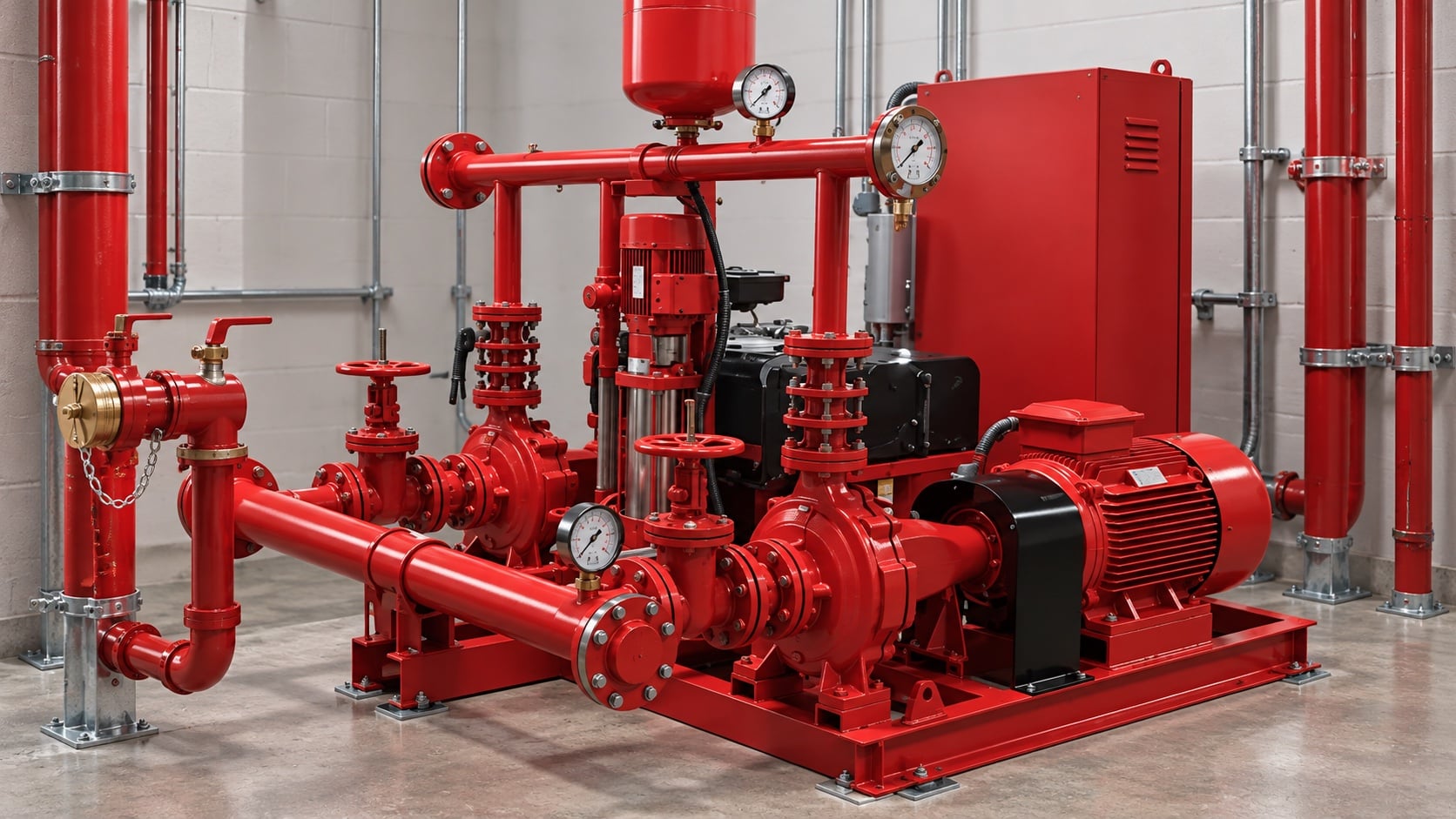
Add static elevation, friction through pipe and fittings, equipment losses, and required residual head, then subtract dependable suction head. Keep all terms in one consistent unit system. Review this condition at normal, test, and credible abnormal states before procurement. Identify the source of every input, the unit used, the operating condition it represents, and the person responsible for approval. If information is preliminary, mark the assumption and test how the decision changes at a conservative boundary. This prevents a neat calculation from hiding an uncertain water level, pressure, valve position, driver condition, or simultaneous demand.
For fire pump flow calculation, verify this section against the selected pump curve, the actual site arrangement, manufacturer instructions, and the current requirements accepted by the authority having jurisdiction. Check the installed condition as well as the drawing because pipe routes, elevations, supports, controls, and access often change during construction. Record the result in a form that can be repeated during commissioning and later inspection. Do not change a safety-critical setting or isolate fire protection without the approved impairment and restoration process.
Convert pressure and head correctly
For water, pressure and head are related through density and gravity. For other permitted liquids or unusual temperature, use actual density rather than a water shortcut. The design team should turn this point into a traceable calculation or drawing note. Identify the source of every input, the unit used, the operating condition it represents, and the person responsible for approval. If information is preliminary, mark the assumption and test how the decision changes at a conservative boundary. This prevents a neat calculation from hiding an uncertain water level, pressure, valve position, driver condition, or simultaneous demand.
For fire pump flow calculation, verify this section against the selected pump curve, the actual site arrangement, manufacturer instructions, and the current requirements accepted by the authority having jurisdiction. Check the installed condition as well as the drawing because pipe routes, elevations, supports, controls, and access often change during construction. Record the result in a form that can be repeated during commissioning and later inspection. Do not change a safety-critical setting or isolate fire protection without the approved impairment and restoration process.
جدول قرارات عملي
| مدخل | لماذا يهم الأمر | الأدلة المطلوبة |
|---|---|---|
| System demand | Defines the target flow and residual pressure | حساب هيدروليكي معتمد |
| إمدادات المياه | Determines available suction pressure | Current flow test or tank data |
| Elevation | Creates static head | Verified elevations |
| Pipe and fittings | Create flow-dependent losses | As-built sizes and route |
| منحنى المضخة | Confirms feasible duty | Manufacturer certified curve |
| Driver and power | Must carry the required load | Driver and controller data |
Check the full pump curve
Verify shutoff pressure, the rated duty point, higher-flow performance, driver loading, suction conditions, and downstream pressure limits. One point on a curve is not enough. Treat this as a system condition rather than an isolated component choice. Identify the source of every input, the unit used, the operating condition it represents, and the person responsible for approval. If information is preliminary, mark the assumption and test how the decision changes at a conservative boundary. This prevents a neat calculation from hiding an uncertain water level, pressure, valve position, driver condition, or simultaneous demand.
For fire pump flow calculation, verify this section against the selected pump curve, the actual site arrangement, manufacturer instructions, and the current requirements accepted by the authority having jurisdiction. Check the installed condition as well as the drawing because pipe routes, elevations, supports, controls, and access often change during construction. Record the result in a form that can be repeated during commissioning and later inspection. Do not change a safety-critical setting or isolate fire protection without the approved impairment and restoration process.
Coordinate zoning and pressure control
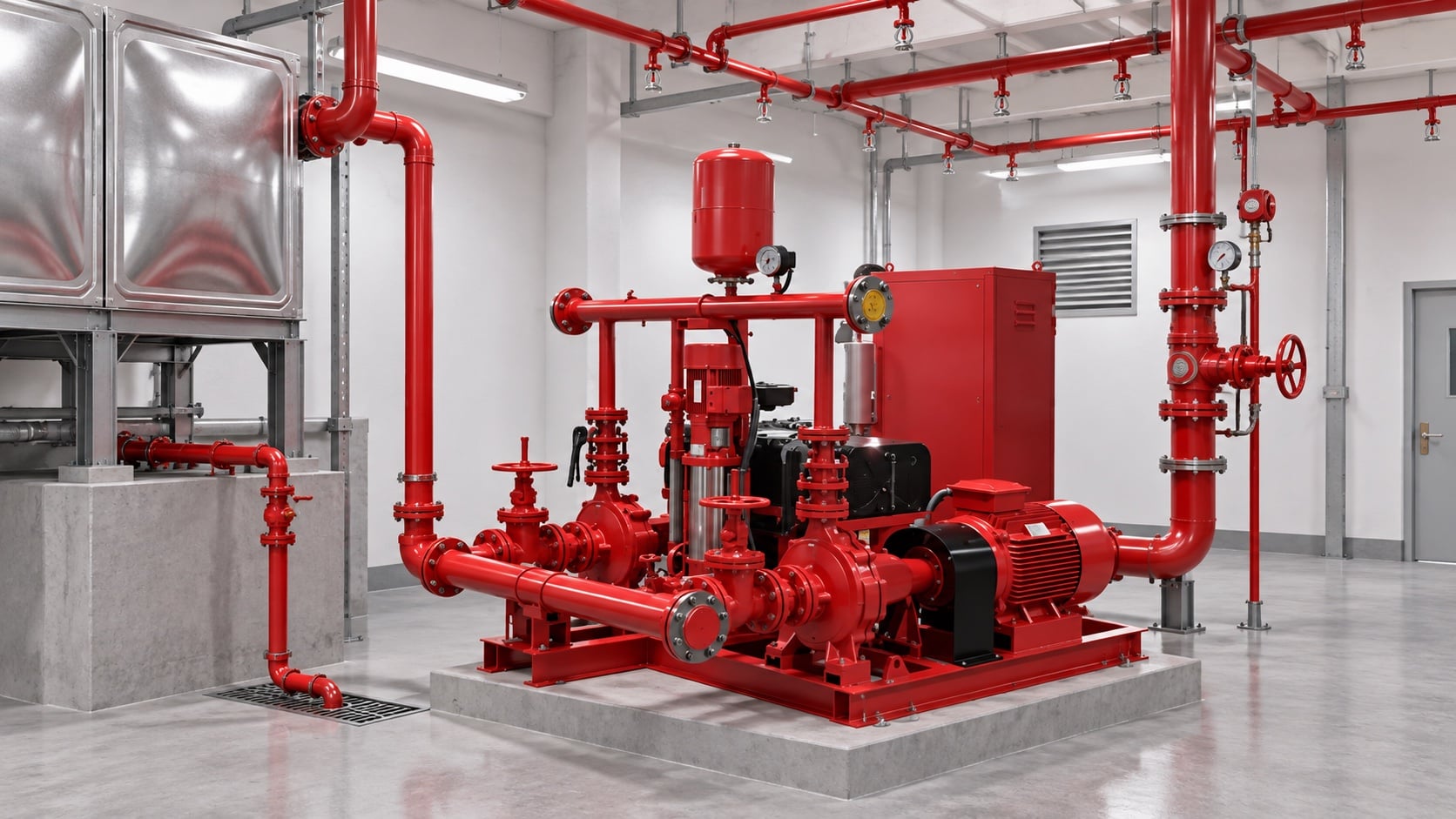
High-rise or multi-zone systems may need separate pumps, tanks, pressure-regulating devices, or staged arrangements. Do not use a relief valve as routine operating pressure control. The most useful evidence is measured or approved project data, not a copied rule of thumb. Identify the source of every input, the unit used, the operating condition it represents, and the person responsible for approval. If information is preliminary, mark the assumption and test how the decision changes at a conservative boundary. This prevents a neat calculation from hiding an uncertain water level, pressure, valve position, driver condition, or simultaneous demand.
For fire pump flow calculation, verify this section against the selected pump curve, the actual site arrangement, manufacturer instructions, and the current requirements accepted by the authority having jurisdiction. Check the installed condition as well as the drawing because pipe routes, elevations, supports, controls, and access often change during construction. Record the result in a form that can be repeated during commissioning and later inspection. Do not change a safety-critical setting or isolate fire protection without the approved impairment and restoration process.
Build a calculation package
Include demand calculations, source test, pipe model, pump curve, driver data, control sequence, valve schedule, and assumptions so another reviewer can reproduce the result. Review this condition at normal, test, and credible abnormal states before procurement. Identify the source of every input, the unit used, the operating condition it represents, and the person responsible for approval. If information is preliminary, mark the assumption and test how the decision changes at a conservative boundary. This prevents a neat calculation from hiding an uncertain water level, pressure, valve position, driver condition, or simultaneous demand.
For fire pump flow calculation, verify this section against the selected pump curve, the actual site arrangement, manufacturer instructions, and the current requirements accepted by the authority having jurisdiction. Check the installed condition as well as the drawing because pipe routes, elevations, supports, controls, and access often change during construction. Record the result in a form that can be repeated during commissioning and later inspection. Do not change a safety-critical setting or isolate fire protection without the approved impairment and restoration process.
Validate at acceptance testing
Measure suction and discharge pressure and test flow using calibrated instruments. Compare corrected results with the accepted curve and investigate any material deviation before handover. The design team should turn this point into a traceable calculation or drawing note. Identify the source of every input, the unit used, the operating condition it represents, and the person responsible for approval. If information is preliminary, mark the assumption and test how the decision changes at a conservative boundary. This prevents a neat calculation from hiding an uncertain water level, pressure, valve position, driver condition, or simultaneous demand.
For fire pump flow calculation, verify this section against the selected pump curve, the actual site arrangement, manufacturer instructions, and the current requirements accepted by the authority having jurisdiction. Check the installed condition as well as the drawing because pipe routes, elevations, supports, controls, and access often change during construction. Record the result in a form that can be repeated during commissioning and later inspection. Do not change a safety-critical setting or isolate fire protection without the approved impairment and restoration process.
كيف يرتبط هذا بمعدات BORRAPUMP
توفر شركة BORRAPUMP معدات ضخ هندسية لمشاريع المياه والحماية من الحريق. راجع ما يخص ذلك تكوين منتج BORRAPUMP كمنطلق، ثم قم بتقديم التدفق المطلوب، والرأس، ومصدر المياه، والمشغل، والطاقة، وأدوات التحكم، وظروف الموقع، والمتطلبات المطبقة، والكمية، والوجهة. يجب أن يستخدم الاختيار النهائي الأساس الهيدروليكي للمشروع والتقديم المعتمد؛ لا يدعي هذا الدليل أن ترتيباً واحداً في الكتالوج يناسب كل اختصاص أو مخاطرة.
أدلة BORRAPUMP ذات الصلة
- أساسیات تصميم أنظمة مضخات الحريق
- اختيار مضخة مكافحة الحريق
- مضخات الحريق التي تعمل بالديزل مقابل الكهرباء
مراجع موثوقة
تحدد المصادر التالية حدود المعايير، وسياق السلامة من الحرائق، ومبادئ نظام المضخات المستخدمة في هذا الدليل. قم دائماً بتطبيق الإصدار والاعتماد المحلي المقبول للمشروع.
- صفحة تطوير معيار NFPA 20
- موارد أنظمة المضخات التابعة لوزارة الطاقة الأمريكية
- أبحاث المعهد الوطني للمعايير والتقنية (نيست) للحماية من الحريق
فيديو تعليمي
الخلفية التعليمية بواسطة الهندسة العملية: هل المضخات تولد ضغطاً أم تدفقاً؟. يدعم الفيديو مفهوم الهندسة الأساسي ولا يحل محل متطلبات الحماية من الحريق الخاصة بالمشروع.
الأسئلة الشائعة
Can I size a fire pump from building area?
No. Building area may influence the protection design, but the pump duty comes from the approved hydraulic demand and water supply.
Should I add suction and discharge gauge readings?
Use differential pressure across the pump, then convert it correctly to head and include elevation differences between gauge points where relevant.
What if several systems operate together?
Use the combination required by the approved design basis and authority having jurisdiction. Do not assume every demand is simultaneous or independent.
Can a larger pump provide extra safety?
Oversizing can create excessive pressure, unstable operation, and difficult testing. Select against the complete system curve and permitted pressure limits.
قائمة التحقق من التحقق النهائي
قبل الموافقة، قم بتأكيد الأساس الهيدروليكي، وحالة مصدر المياه، ومنحنى المضخة المختار، وبيانات المحرك ووحدة التحكم، وتصنيفات ضغط المكونات، وترتيب الصمامات، وطريقة الاختبار، وسُبل الوصول، والصرف، والإنذارات، وإجراءات إعادة التشغيل. قم بحل أي اختلافات بين المخططات والنظام المُركَّب. وأثناء التشغيل التجريبي، استخدم أدوات معايرة وسجّل ضغط السحب، وضغط الطرد، ومعدل التدفق، والسرعة، وحالة المحرك، والإنذارات، والملاحظات غير الطبيعية عند كل نقطة مطلوبة. احتفظ بالنتائج المقبولة مع سجلات غرفة المضخات لكي تُقارن عمليات الفحص اللاحقة النتائج المتشابهة ببعضها.