
A fire pump relief valve can refer to a small casing relief valve that prevents pressure buildup from heat when a pump runs at little or no flow, or a larger main pressure relief valve used only where the approved fire-protection design requires it. These devices are not interchangeable. Selection and settings must follow the adopted fire code and standard, the authority having jurisdiction, the listed equipment data, pump curve, driver behavior, and the system pressure limits. A relief valve must never be used as a casual substitute for correct pump and system design.
Hướng dẫn này là một khung kỹ thuật và mua sắm ban đầu, không phải là sự thay thế cho thiết kế dự án đã được phê duyệt, các quy định hiện hành, hướng dẫn của nhà sản xuất, hoặc sự giám sát có trình độ tại công trường. Công việc điện, kiểm tra khi có điện, cẩu nâng, làm việc trong không gian hạn chế, công việc phòng cháy chữa cháy, đào đất, chất lỏng nguy hiểm, nước thải, và các hệ thống có áp suất đòi hỏi các quy trình cụ thể theo công việc và nhân sự có năng lực. Duy trì bảo vệ tự động và tình trạng sẵn sàng của hệ thống trong khi điều tra sự cố. Nếu chất lỏng thực tế, chế độ vận hành, điều kiện công trường hoặc yêu cầu quản lý khác với các giả định, hãy dừng lại và nhận đánh giá kỹ thuật đã được sửa đổi.
- Distinguish casing relief from main pressure relief
- Build the system pressure envelope
- Select listing, capacity, range, and discharge route
- Coordinate with pump, controller, and test arrangement
- Set, test, seal, and document the valve
- Inspect without defeating fire protection
- Bảng quyết định
- Các câu hỏi thường gặp
Distinguish casing relief from main pressure relief
A casing relief valve is typically a small device connected to the pump casing or discharge arrangement to release enough water to prevent damaging temperature rise during churn or low-flow operation. It is not sized to control the full pump discharge. A main pressure relief valve, where required or permitted by the governing design, can pass a much larger flow to limit pressure under defined conditions. The project documents should name the valve type, connection, discharge destination, listing, size, pressure range, and reason for use. Confusing the two can leave a pump without thermal protection or create an unintended large discharge. Review the current adopted edition and authority comments rather than copying a detail from another project. The pump supplier should receive the system pressure basis and the fire-protection designer should approve the final arrangement.
Build the system pressure envelope
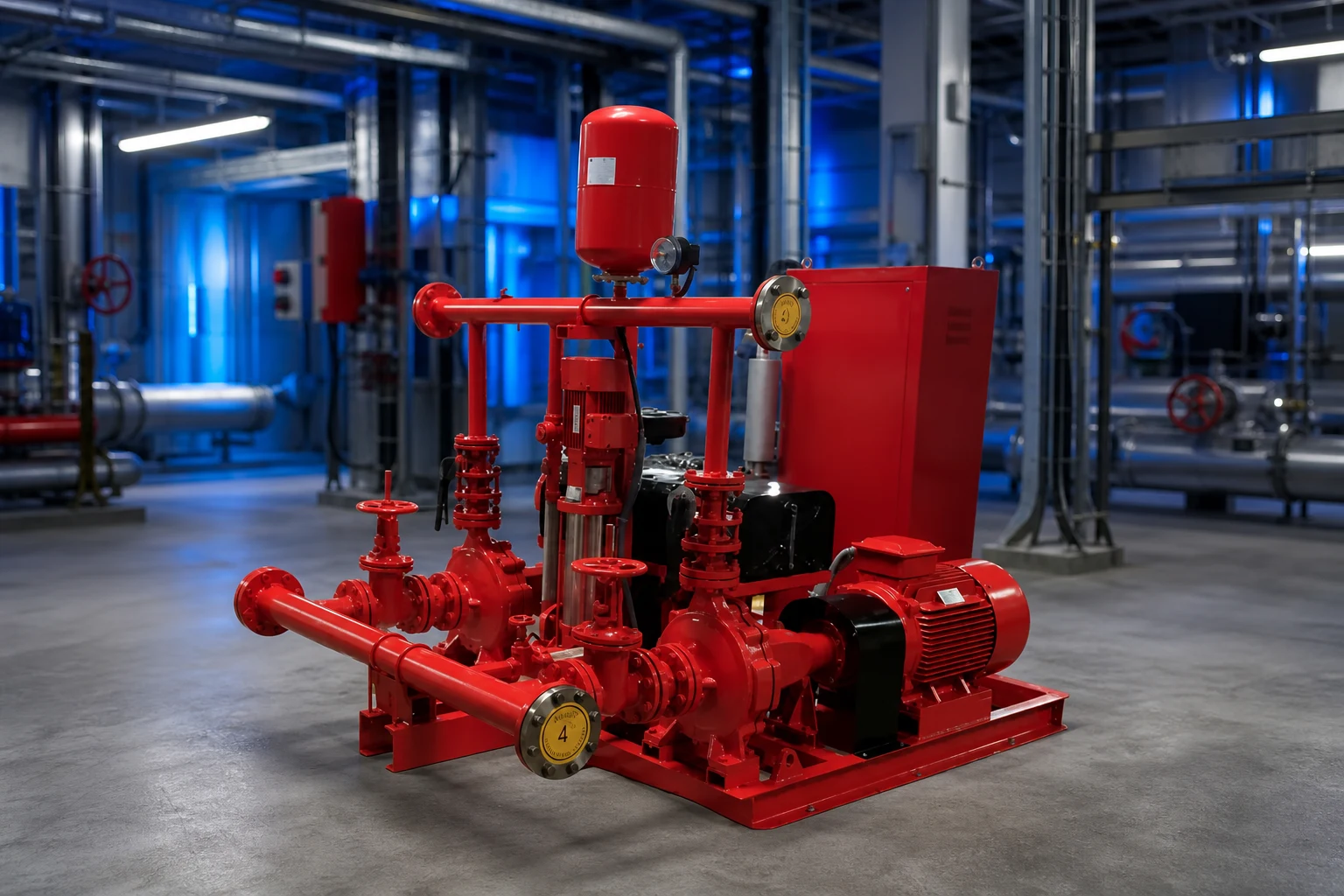
Review static suction pressure, pump rated and shutoff head, elevation, driver speed, maximum credible suction condition, test conditions, and the pressure ratings of pipe, fittings, valves, hose connections, equipment, and downstream components. For diesel-driven pumps, possible overspeed or speed variation must be addressed through the approved equipment data and design. Convert head and pressure consistently for the liquid and elevations. The relief setting cannot be chosen from the pump rated pressure alone, and it must not prevent the pump from meeting required fire-flow duty. Document normal, churn, test, and maximum credible cases. If a proposed valve setting conflicts with system ratings or required performance, resolve the pump, driver, piping, and design basis rather than treating the valve as an isolated accessory.
Select listing, capacity, range, and discharge route
Confirm that the exact valve is listed or approved as required for its fire-protection service and that size, pressure range, temperature, materials, end connections, and capacity suit the design. A main relief valve needs documented capacity at the relevant differential pressure; a casing relief valve needs the correct connection and setting range for thermal relief duty. Provide isolation only where and how the governing design allows, with supervision where required. Route discharge to a safe, visible, and acceptable location with drainage capacity, freeze protection, and protection from erosion or injury. Backpressure can affect operation and must be included when applicable. Do not discharge where water can damage electrical equipment, flood the pump room, undermine foundations, or create an unnoticed closed loop back to suction.
Bảng quyết định dự án
| Xem lại mặt hàng | Casing relief valve | Main pressure relief valve |
|---|---|---|
| Mục đích chính | Limit heat buildup at low or no flow | Limit system pressure where approved design requires |
| Typical flow role | Small thermal-relief flow | Larger documented relief capacity |
| Selection basis | Pump arrangement, setting range, listing | Pressure envelope, capacity, listing, backpressure |
| Discharge concern | Visible safe drain location | Full-flow route, drainage and erosion |
| Test record | Opening and reseating under approved condition | Capacity/operation under approved test method |
Coordinate with pump, controller, and test arrangement
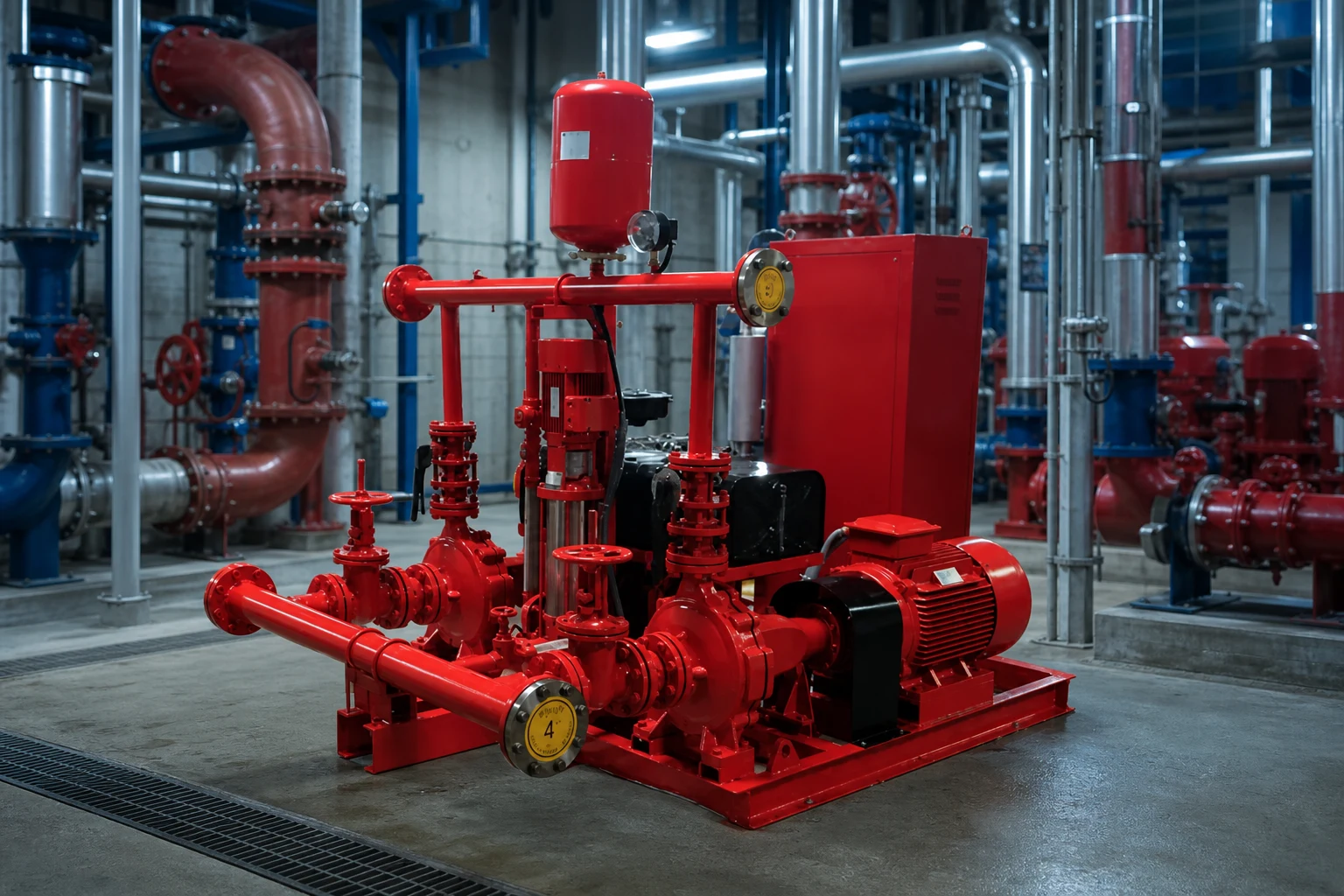
The relief valve is part of a fire pump system that includes water supply, pump, driver, controller, sensing, check and isolation valves, test header or flow meter, alarms, and room drainage. The valve arrangement must not interfere with acceptance testing or hide abnormal pump behavior. Coordinate pipe supports and valve loads with pump nozzles. The controller and alarms may need to report pump running or other conditions, but a mechanical relief valve should not be assumed to correct control settings. Review whether a variable-speed pressure-limiting control strategy is used and how its required backup and failure behavior are addressed by the approved design. Every device and set point should appear consistently on drawings, calculations, schedules, and test procedures.
Set, test, seal, and document the valve
Settings should be established by qualified personnel using calibrated instruments and the approved procedure. Record the valve identification, model, size, listed range, final setting, gauge identification, pump speed, suction pressure, discharge pressure, flow condition, discharge observation, and authority or responsible-party acceptance. Test casing relief operation under the applicable low-flow condition without allowing unsafe temperature rise. Test a main relief valve only through the approved method and with a discharge route capable of handling the flow. After adjustment, secure and seal the device as required and update the record. Never raise a setting merely to stop nuisance discharge until the cause—incorrect setting, high suction pressure, speed, blocked discharge, backpressure, or system mismatch—has been identified.
Inspect without defeating fire protection
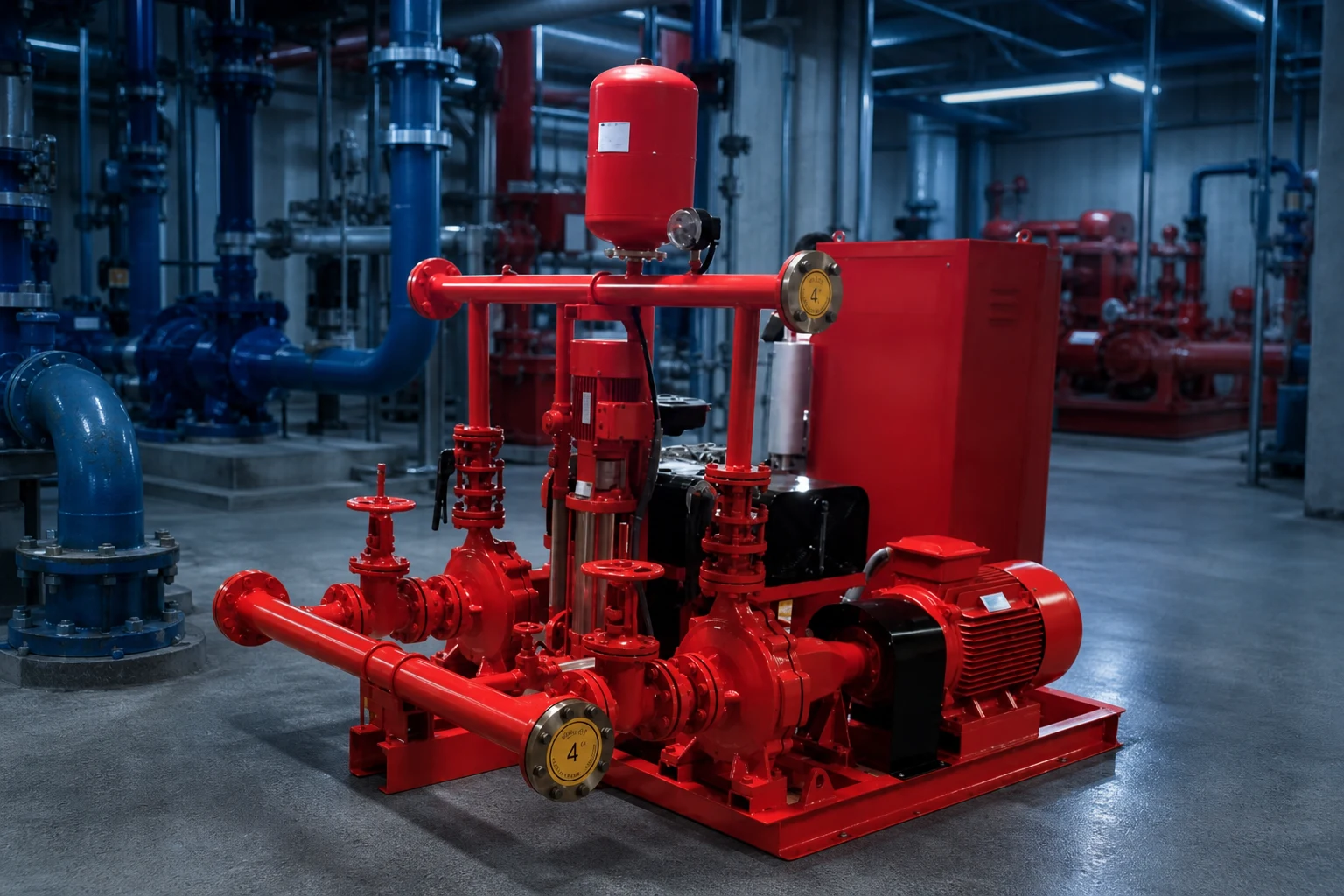
Inspection should look for leakage, corrosion, damage, blocked outlets, closed or improperly positioned valves, missing seals, changed settings, unsafe discharge, freeze exposure, and evidence of repeated operation. Maintenance frequency and test scope follow the adopted requirements, manufacturer instructions, impairment procedure, and facility program. Before isolating or servicing any fire-protection component, follow the approved impairment and notification process. Replacement is not complete until the listing, size, range, setting, discharge, and system record are verified. A relief valve that is silent may still be blocked or isolated, while one that leaks may be warning of system pressure changes. Trend observations with pump test results rather than treating the valve as a standalone plumbing item.
Biên bản mua sắm và nghiệm thu
Một bảng so sánh nhà cung cấp hoàn chỉnh nên sử dụng một bảng dữ liệu chung. Hãy đặt các điểm làm việc thiết kế và thay thế, chất lỏng, nhiệt độ, hàm lượng chất rắn, độ cao địa điểm, công suất, hệ thống điều khiển, lắp đặt, số giờ vận hành, số lượng, điểm đến và các tài liệu bắt buộc ở phần đầu. Chuẩn hóa các khác biệt về phạm vi trước khi so sánh giá cả hoặc hiệu suất. Yêu cầu đường cong đặc tính được chứng nhận hoặc dữ liệu năng suất, công suất tiêu thụ, giới hạn vận hành, vật liệu, kích thước, trọng lượng, các kết nối, động cơ hoặc thiết bị truyền động, bộ điều khiển, phụ kiện, các bài kiểm tra, phương pháp bảo quản, phụ tùng thay thế, hướng dẫn lắp đặt và ranh giới bảo hành. Ghi lại mọi sai lệch và giả định chưa được giải quyết. Trong quá trình đánh giá kỹ thuật, hãy truy xuất nguồn gốc của từng tính năng được chào giá về một đầu vào của dự án thay vì cộng điểm cho các tính năng mà điều kiện làm việc không cần đến. Trong quá trình chạy thử, hãy đo đạc các biến số giống như đã dùng cho việc lựa chọn thiết bị để kết quả lắp đặt thực tế có thể so sánh được với cơ sở ban đầu. Nếu các điều kiện hiện trường khác nhau, hãy cập nhật tính toán và nhận được sự phê duyệt có thẩm quyền trước khi thay đổi thiết bị hoặc các cài đặt bảo vệ.
Chủ đề này liên quan đến thiết bị BORRAPUMP như thế nào
Hướng dẫn này hỗ trợ việc đánh giá sớm fire pump relief valve tuyến ứng dụng. Nó không gán một mô hình cuối cùng hay khẳng định rằng một cấu hình chuẩn phù hợp cho mọi dự án. Hãy gửi các điểm công tác, dữ liệu chất lỏng, bản vẽ mặt bằng, nguồn điện, hệ thống điều khiển, số lượng, điểm đến, các phê duyệt cần thiết và phạm vi kiểm tra để sản phẩm đề xuất có thể được kiểm tra đối với dịch vụ thực tế.
Các hướng dẫn kỹ thuật liên quan đến BORRAPUMP
- những cơ bản về thiết kế hệ thống máy bơm chữa cháy
- NFPA 20 fire pump acceptance testing
- sơ đồ hệ thống máy bơm chữa cháy
Các nguồn uy tín và tài liệu học tập nâng cao
Chủ đề máy bơm cứu hỏa NFPA; OSHA fire protection; FM Global resources. Các nguồn này cung cấp bối cảnh chung về an toàn, môi trường hoặc kỹ thuật. Các quy tắc hiện được thông qua, phê duyệt dự án và hướng dẫn thiết bị vẫn giữ nguyên giá trị quyết định.
Video giáo dục của Practical Engineering: Máy bơm tạo ra áp suất hay lưu lượng?. Nó giải thích các nguyên tắc nền tảng và không thay thế các hướng dẫn dành riêng cho dự án.
Các câu hỏi thường gặp
Van xả áp vỏ ống chống có giống với van xả áp chính không?
Không. Van vỏ thường cung cấp dòng xả giảm áp nhiệt nhỏ; van giảm áp suất chính có vai trò về dung lượng và áp suất hệ thống khác.
Van an toàn có thể sửa chữa được một bơm chữa cháy quá khổ không?
Không nên dùng thiết bị này làm giải pháp thay thế thông thường cho thiết kế bơm, động cơ và hệ thống chuẩn xác. Thiết kế viên phòng cháy chữa cháy được phê duyệt và cơ quan có thẩm quyền phải xem xét cơ sở áp suất.
Nước xả van an toàn nên được thải đi đâu?
Đến vị trí an toàn, có thể nhìn thấy được, tuân thủ quy định do thiết kế đã phê duyệt chỉ ra, có hệ thống thoát nước đầy đủ, chống đóng băng và không gây nguy hiểm cho thiết bị hoặc con người.
Ai có thể thay đổi cài đặt này?
Chỉ những nhân viên có thẩm quyền và đủ tiêu chuẩn tuân theo quy trình đã được phê duyệt, với các dụng cụ hiệu chuẩn và hồ sơ kiểm tra được cập nhật.
Mốc kiểm tra dự án cuối khóa
Trước khi đặt hàng hoặc thay đổi hiện trường, hãy đối chiếu các thông số kỹ thuật và bản vẽ đã được phê duyệt với dữ liệu của nhà供应商, vật liệu, kích thước, trọng lượng, kết nối, bộ điều khiển, thiết bị điều khiển, phụ kiện, bảo vệ, phạm vi kiểm tra, tài liệu, phụ tùng thay thế, phương pháp lắp đặt, khả năng tiếp cận để bảo trì và các yêu cầu về điểm đến. Ghi lại các giả định còn lại và phân công trách nhiệm để giải quyết chúng. Thông tin được chấp nhận cuối cùng phải là cơ sở được sử dụng cho việc lắp đặt, chạy thử và bảo trì trong tương lai.