
A clogged pump suction pipe usually shows up as reduced flow, lower suction pressure, unstable discharge, noise, cavitation-like symptoms, longer fill time, or a change in motor load. Confirm the symptom with gauges and operating data before opening equipment. Then isolate and lock out the pump, remove pressure, verify the liquid hazard, and inspect the easiest restrictions first: source level, suction valve, strainer, foot valve, hose collapse, air leak, and intake blockage. Do not keep running a starved centrifugal pump; it can damage seals, impellers, bearings, and the liquid itself.
Hướng dẫn này là một khung kỹ thuật và mua sắm ban đầu, không phải là sự thay thế cho thiết kế dự án đã được phê duyệt, các quy định hiện hành, hướng dẫn của nhà sản xuất, hoặc sự giám sát có trình độ tại công trường. Công việc điện, kiểm tra khi có điện, cẩu nâng, làm việc trong không gian hạn chế, công việc phòng cháy chữa cháy, đào đất, chất lỏng nguy hiểm, nước thải, và các hệ thống có áp suất đòi hỏi các quy trình cụ thể theo công việc và nhân sự có năng lực. Duy trì bảo vệ tự động và tình trạng sẵn sàng của hệ thống trong khi điều tra sự cố. Nếu chất lỏng thực tế, chế độ vận hành, điều kiện công trường hoặc yêu cầu quản lý khác với các giả định, hãy dừng lại và nhận đánh giá kỹ thuật đã được sửa đổi.
- Recognize restriction without guessing
- Inspect source, valves, strainers, and flexible hose
- Find air leaks and loss of prime
- Isolate and remove an internal blockage safely
- Prevent repeat blockages through system design
- Recommission and verify the root cause is removed
- Bảng quyết định
- Các câu hỏi thường gặp
Recognize restriction without guessing
Compare current flow, suction and discharge pressures, speed, power or current, vibration, sound, and liquid level with the commissioning baseline at the same valve and process condition. A suction restriction often increases suction vacuum or reduces absolute suction pressure while flow falls, but instrument location and system geometry matter. A blocked discharge, worn impeller, wrong rotation, entrained air, low speed, closed valve, or process change can produce similar low-flow symptoms. Cavitation noise may result from low source level, hot liquid, high suction loss, or excessive flow rather than a physical plug. Establish when the change began and whether it follows cleaning, maintenance, rainfall, batch change, tank level, or parallel-pump operation. Do not dismantle the pump until the evidence points to the suction side.
Inspect source, valves, strainers, and flexible hose
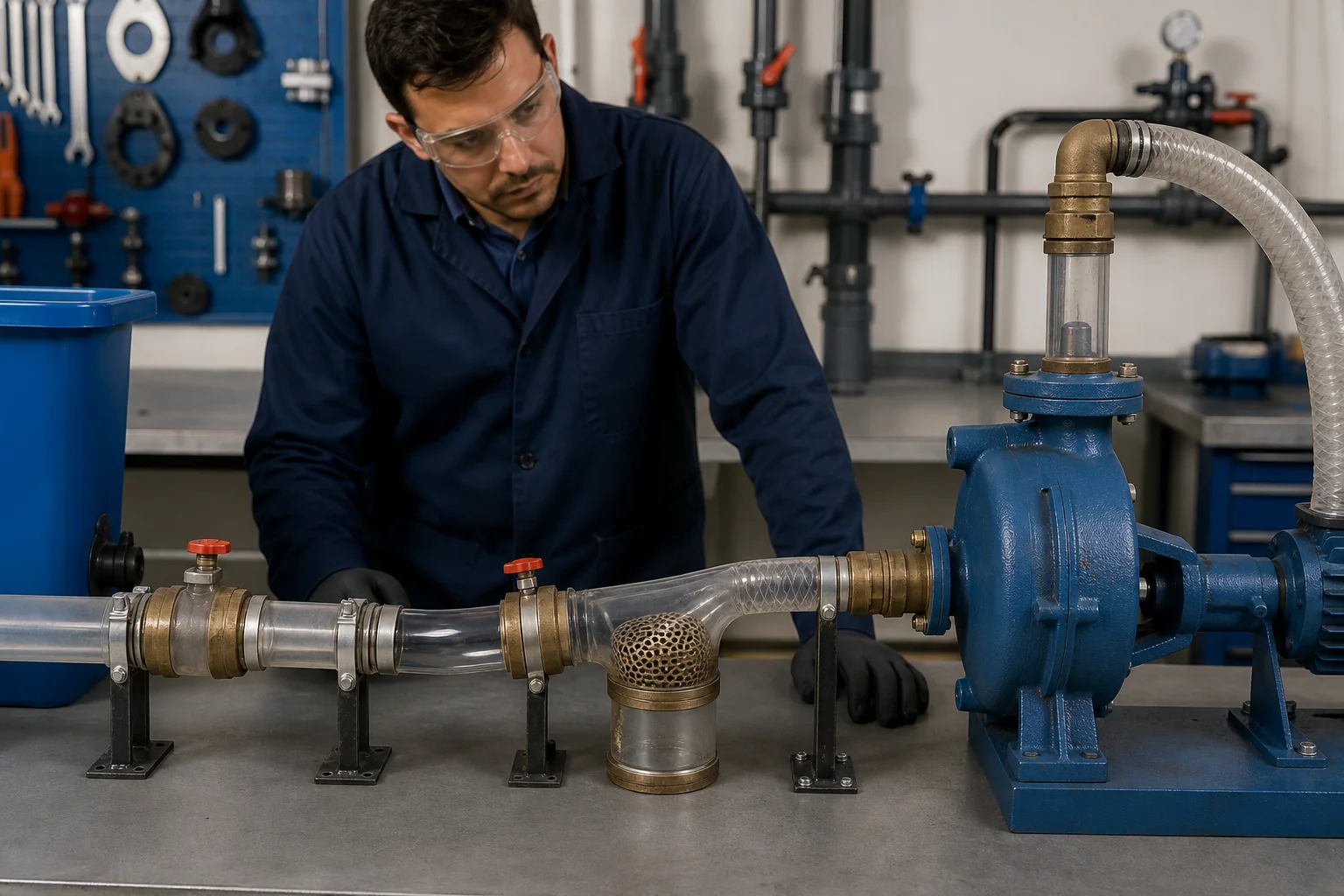
Check actual source level and pressure, vortexing, sediment, floating debris, ice, and intake submergence. Verify every suction valve position and confirm that a gate or internal disc has not detached. Inspect strainers, baskets, foot valves, temporary screens, reducers, gaskets, and flexible connectors. A hose can collapse under vacuum even when it looks normal while stopped; its liner may delaminate internally. Check for kinked routes, high points, unsupported weight, and undersized fittings. Differential pressure across a strainer is useful when taps are correctly located and gauges are reliable. Clean components through the approved method and capture removed material for root-cause review rather than washing away evidence.
Find air leaks and loss of prime
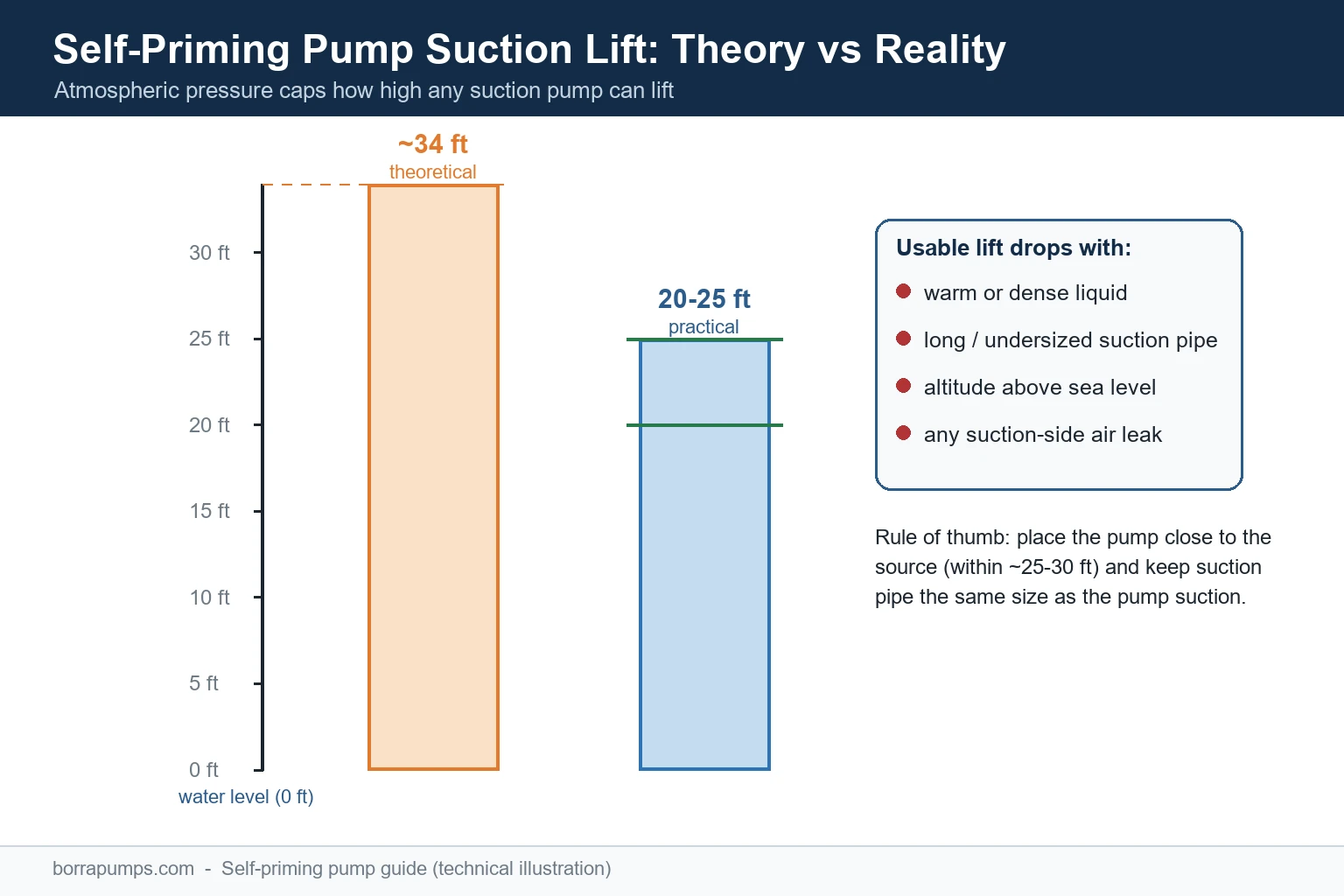
On suction lift systems, small air leaks can prevent prime without leaking liquid outward. Inspect flanges, gaskets, threaded joints, valve stems, instrument connections, drain plugs, casing seals, hose couplings, and the foot valve. Use only approved leak-testing methods suitable for the liquid and pressure; never apply unsafe pressure or flame. Confirm the pump casing and priming chamber are filled as required and that the priming system, ejector, vacuum pump, separator, and non-return devices operate correctly. On flooded suction, verify that the source valve is open and the line is vented where needed. Repeated loss of prime after shutdown can point to a leaking check or foot valve, trapped gas, or a suction route that drains back.
Bảng quyết định dự án
| Observed symptom | Possible suction-side cause | Xác minh |
|---|---|---|
| Low flow with higher suction vacuum | Blocked strainer or pipe restriction | Compare suction pressure and inspect differential |
| Intermittent flow and bubbles | Air leak, vortex or low level | Check source, joints and submergence |
| Prime lost after shutdown | Foot/check valve leak or drain-back | Observe hold condition and approved leak test |
| Hose flattens during operation | Insufficient vacuum rating or failed liner | Inspect dynamically and replace correctly |
| Rapid repeat blockage | Upstream debris, ragging, scale or sediment | Identify removed material and entry path |
| Flow remains low after cleaning | Other system or pump fault | Check speed, rotation, discharge and wear |
Isolate and remove an internal blockage safely
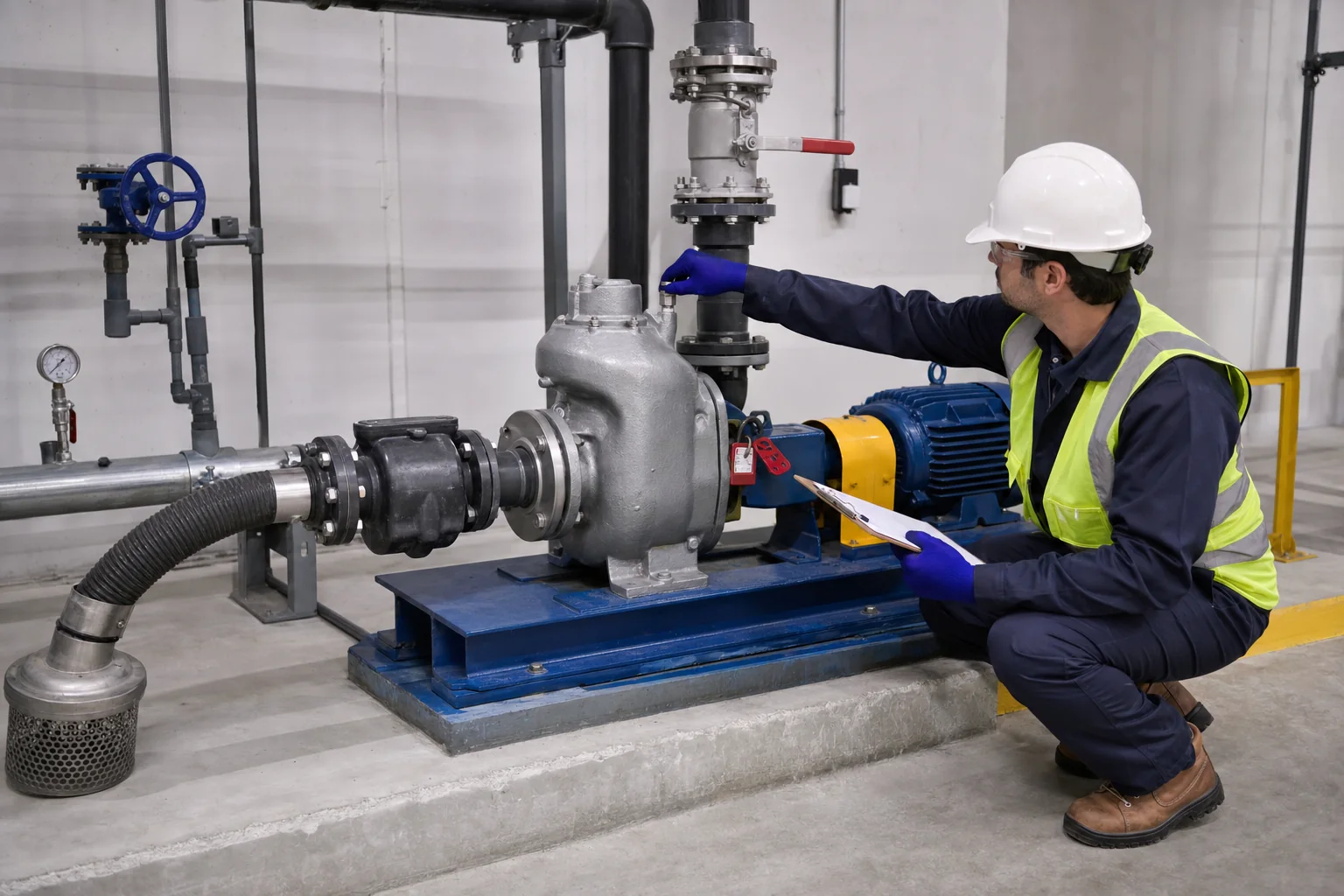
Review the safety data, temperature, pressure, biological hazard, confined-space risk, and environmental controls before opening the line. Stop the pump, isolate energy, close and secure valves, depressurize, drain to an approved location, verify zero energy, and provide containment. Heavy strainers and pipe sections need lifting plans. Use cleanout ports or removable spool pieces where designed rather than driving rods blindly through piping. Sharp debris, chemicals, and wastewater require appropriate tools and protective controls. After removal, inspect the material and its entry path. Ragging may need upstream screens or operating changes; scale may indicate chemistry or temperature; collapsed lining requires hose replacement; construction debris points to incomplete flushing. Restore gaskets, fasteners, supports, and valve positions under the approved procedure.
Prevent repeat blockages through system design
Match intake opening and strainer free area to the liquid and required flow. A finer screen reduces particle passage but can increase cleaning and suction loss. Provide accessible baskets, differential-pressure indication, duty/standby strainers, backwash, self-cleaning intake, or larger collection sumps where justified. Control velocity and avoid dead legs that collect solids. Keep the intake above settled sediment while maintaining submergence. For fibrous wastewater, select hydraulic passage and upstream handling together; a larger pump alone does not solve ragging. Include flushing and drain connections where they can be used safely. Operating procedures should define inspection triggers from pressure, flow, current, runtime, or level—not only a fixed calendar.
Recommission and verify the root cause is removed
Before restart, confirm all tools and debris are removed, covers and guards installed, valves positioned, vents and drains closed, piping supported, instruments restored, priming complete, and protection active. Start according to the pump procedure and observe suction pressure, discharge pressure, flow, speed, current, vibration, temperature, and leakage. Compare the readings with the original baseline and calculate whether the system operating point has returned. If the restriction recurs quickly, investigate the upstream process rather than repeating cleanout. Record the material, location, measurements before and after, photographs, maintenance action, and prevention recommendation. The goal is to restore hydraulic performance and remove the source, not simply to make the pump run for one shift.
Biên bản mua sắm và nghiệm thu
Một bảng so sánh nhà cung cấp hoàn chỉnh nên sử dụng một bảng dữ liệu chung. Hãy đặt các điểm làm việc thiết kế và thay thế, chất lỏng, nhiệt độ, hàm lượng chất rắn, độ cao địa điểm, công suất, hệ thống điều khiển, lắp đặt, số giờ vận hành, số lượng, điểm đến và các tài liệu bắt buộc ở phần đầu. Chuẩn hóa các khác biệt về phạm vi trước khi so sánh giá cả hoặc hiệu suất. Yêu cầu đường cong đặc tính được chứng nhận hoặc dữ liệu năng suất, công suất tiêu thụ, giới hạn vận hành, vật liệu, kích thước, trọng lượng, các kết nối, động cơ hoặc thiết bị truyền động, bộ điều khiển, phụ kiện, các bài kiểm tra, phương pháp bảo quản, phụ tùng thay thế, hướng dẫn lắp đặt và ranh giới bảo hành. Ghi lại mọi sai lệch và giả định chưa được giải quyết. Trong quá trình đánh giá kỹ thuật, hãy truy xuất nguồn gốc của từng tính năng được chào giá về một đầu vào của dự án thay vì cộng điểm cho các tính năng mà điều kiện làm việc không cần đến. Trong quá trình chạy thử, hãy đo đạc các biến số giống như đã dùng cho việc lựa chọn thiết bị để kết quả lắp đặt thực tế có thể so sánh được với cơ sở ban đầu. Nếu các điều kiện hiện trường khác nhau, hãy cập nhật tính toán và nhận được sự phê duyệt có thẩm quyền trước khi thay đổi thiết bị hoặc các cài đặt bảo vệ.
Chủ đề này liên quan đến thiết bị BORRAPUMP như thế nào
Hướng dẫn này hỗ trợ việc đánh giá sớm industrial pump maintenance clogged suction pipe tuyến ứng dụng. Nó không gán một mô hình cuối cùng hay khẳng định rằng một cấu hình chuẩn phù hợp cho mọi dự án. Hãy gửi các điểm công tác, dữ liệu chất lỏng, bản vẽ mặt bằng, nguồn điện, hệ thống điều khiển, số lượng, điểm đến, các phê duyệt cần thiết và phạm vi kiểm tra để sản phẩm đề xuất có thể được kiểm tra đối với dịch vụ thực tế.
Các hướng dẫn kỹ thuật liên quan đến BORRAPUMP
Các nguồn uy tín và tài liệu học tập nâng cao
Hệ thống bơm của Bộ Năng lượng Hoa Kỳ; Kiểm soát năng lượng nguy hiểm theo tiêu chuẩn OSHA; Không gian hạn chế theo quy định của OSHA. Các nguồn này cung cấp bối cảnh chung về an toàn, môi trường hoặc kỹ thuật. Các quy tắc hiện được thông qua, phê duyệt dự án và hướng dẫn thiết bị vẫn giữ nguyên giá trị quyết định.
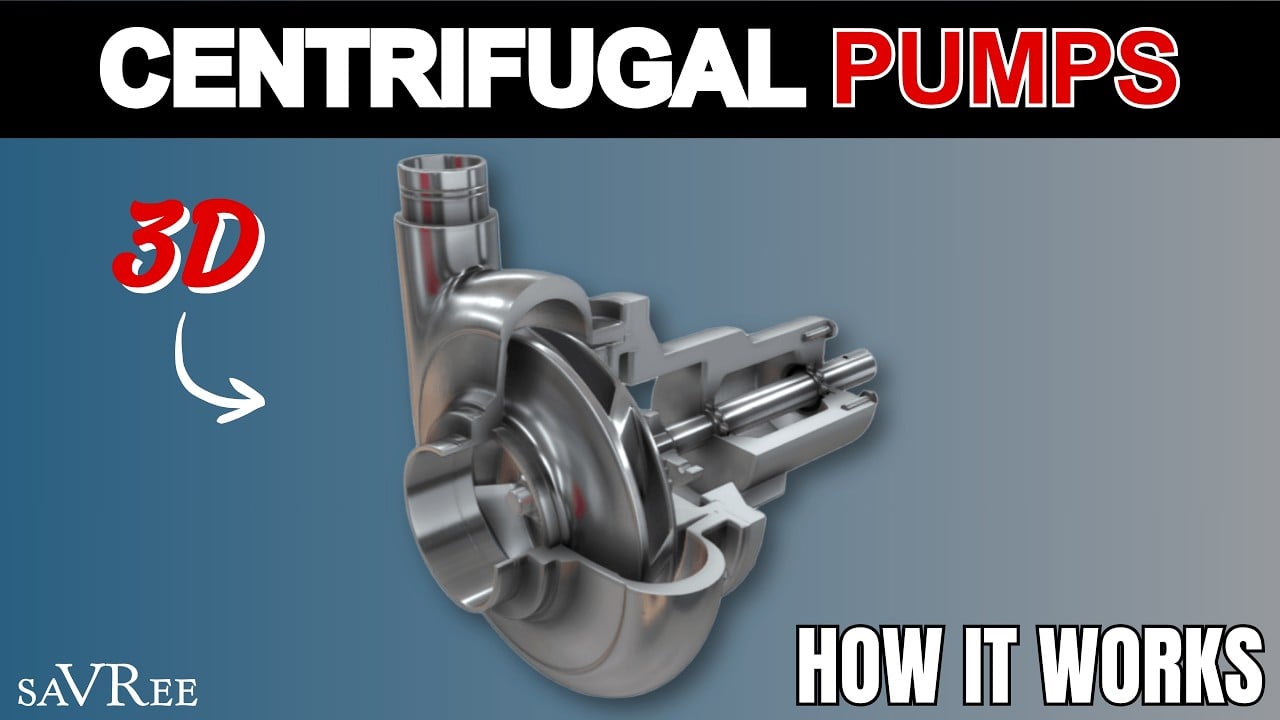
Video giáo dục bởi saVRee: Cách hoạt động của bơm ly tâm. Nó giải thích các nguyên tắc nền tảng và không thay thế các hướng dẫn dành riêng cho dự án.
Các câu hỏi thường gặp
Làm thế nào để biết liệu đường ống hút có bị tắc hay không?
So sánh lưu lượng, áp suất hút và xả, dòng điện hoặc công suất, mức nguồn và dữ liệu cơ sở. Các triệu chứng tương tự có thể bắt nguồn từ không khí, tốc độ, chiều quay, độ mòn hoặc sự hạn chế xả.
Tôi có thể thông tắc đường ống hút bằng cách thông que khi nó vẫn đang được kết nối không?
Không ứng biến. Cô lập, khóa cách ly, xả áp, tháo nước, đánh giá mối nguy hại từ chất lỏng, và sử dụng phương pháp thông rửa đã được phê duyệt.
Tại sao ống hút lại bịẹp chỉ khi đang hoạt động?
Máy hút bụi bị tăng áp suất hút chân không trong quá trình hoạt động. Ống mềm có thể không đạt tiêu chuẩn, bị hỏng lớp lót bên trong, hư hỏng do nhiệt, hoặc bị tắc nghẽn quá mức.
Làm thế nào để ngăn chặn tình trạng tắc nghẽn quay trở lại?
Identify the removed material and its source, then address intake design, screening, sump condition, velocity, cleaning access, process controls, and pump passage together.
Mốc kiểm tra dự án cuối khóa
Trước khi đặt hàng hoặc thay đổi hiện trường, hãy đối chiếu các thông số kỹ thuật và bản vẽ đã được phê duyệt với dữ liệu của nhà供应商, vật liệu, kích thước, trọng lượng, kết nối, bộ điều khiển, thiết bị điều khiển, phụ kiện, bảo vệ, phạm vi kiểm tra, tài liệu, phụ tùng thay thế, phương pháp lắp đặt, khả năng tiếp cận để bảo trì và các yêu cầu về điểm đến. Ghi lại các giả định còn lại và phân công trách nhiệm để giải quyết chúng. Thông tin được chấp nhận cuối cùng phải là cơ sở được sử dụng cho việc lắp đặt, chạy thử và bảo trì trong tương lai.