
A clogged pump suction pipe usually shows up as reduced flow, lower suction pressure, unstable discharge, noise, cavitation-like symptoms, longer fill time, or a change in motor load. Confirm the symptom with gauges and operating data before opening equipment. Then isolate and lock out the pump, remove pressure, verify the liquid hazard, and inspect the easiest restrictions first: source level, suction valve, strainer, foot valve, hose collapse, air leak, and intake blockage. Do not keep running a starved centrifugal pump; it can damage seals, impellers, bearings, and the liquid itself.
คู่มือนี้เป็นกรอบการทำงานด้านวิศวกรรมและการจัดซื้อจัดจ้างในระยะเริ่มต้น ไม่ใช่สิ่งทดแทนการออกแบบโครงการที่ได้รับอนุมัติ ข้อบังคับปัจจุบัน คำแนะนำของผู้ผลิต หรือการควบคุมดูแลหน้างานที่มีคุณสมบัติเหมาะสม งานไฟฟ้า การทดสอบที่มีกระแสไฟฟ้า การยกของ การเข้าไปในพื้นที่อับอากาศ งานป้องกันอัคคีภัย การขุดเจาะ ของเหลวอันตราย น้ำเสีย และระบบที่มีแรงดัน จำเป็นต้องมีขั้นตอนเฉพาะสำหรับงานนั้นๆ และบุคลากรที่มีความสามารถ รักษาการป้องกันอัตโนมัติและความพร้อมใช้งานของระบบในขณะที่ตรวจสอบข้อบกพร่อง หากของเหลว หน้าที่ สภาพหน้างาน หรือข้อกำหนดที่บังคับใช้จริงแตกต่างไปจากสมมติฐาน ให้หยุดทำงานและขอรับการทบทวนทางเทคนิคที่แก้ไขใหม่.
- Recognize restriction without guessing
- Inspect source, valves, strainers, and flexible hose
- Find air leaks and loss of prime
- Isolate and remove an internal blockage safely
- Prevent repeat blockages through system design
- Recommission and verify the root cause is removed
- ตารางการตัดสินใจ
- คำถามที่มักถูกถาม
Recognize restriction without guessing
Compare current flow, suction and discharge pressures, speed, power or current, vibration, sound, and liquid level with the commissioning baseline at the same valve and process condition. A suction restriction often increases suction vacuum or reduces absolute suction pressure while flow falls, but instrument location and system geometry matter. A blocked discharge, worn impeller, wrong rotation, entrained air, low speed, closed valve, or process change can produce similar low-flow symptoms. Cavitation noise may result from low source level, hot liquid, high suction loss, or excessive flow rather than a physical plug. Establish when the change began and whether it follows cleaning, maintenance, rainfall, batch change, tank level, or parallel-pump operation. Do not dismantle the pump until the evidence points to the suction side.
Inspect source, valves, strainers, and flexible hose
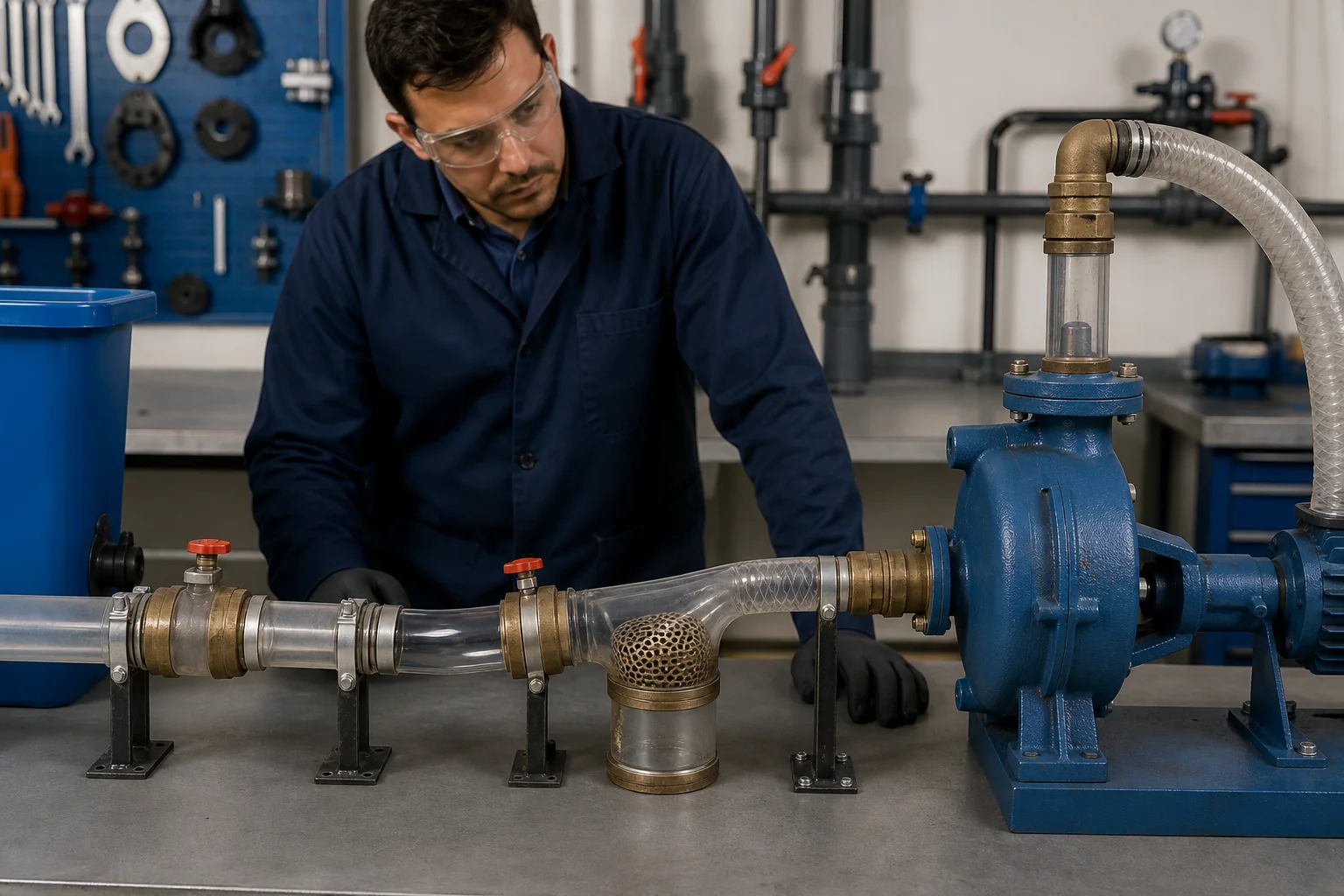
Check actual source level and pressure, vortexing, sediment, floating debris, ice, and intake submergence. Verify every suction valve position and confirm that a gate or internal disc has not detached. Inspect strainers, baskets, foot valves, temporary screens, reducers, gaskets, and flexible connectors. A hose can collapse under vacuum even when it looks normal while stopped; its liner may delaminate internally. Check for kinked routes, high points, unsupported weight, and undersized fittings. Differential pressure across a strainer is useful when taps are correctly located and gauges are reliable. Clean components through the approved method and capture removed material for root-cause review rather than washing away evidence.
Find air leaks and loss of prime
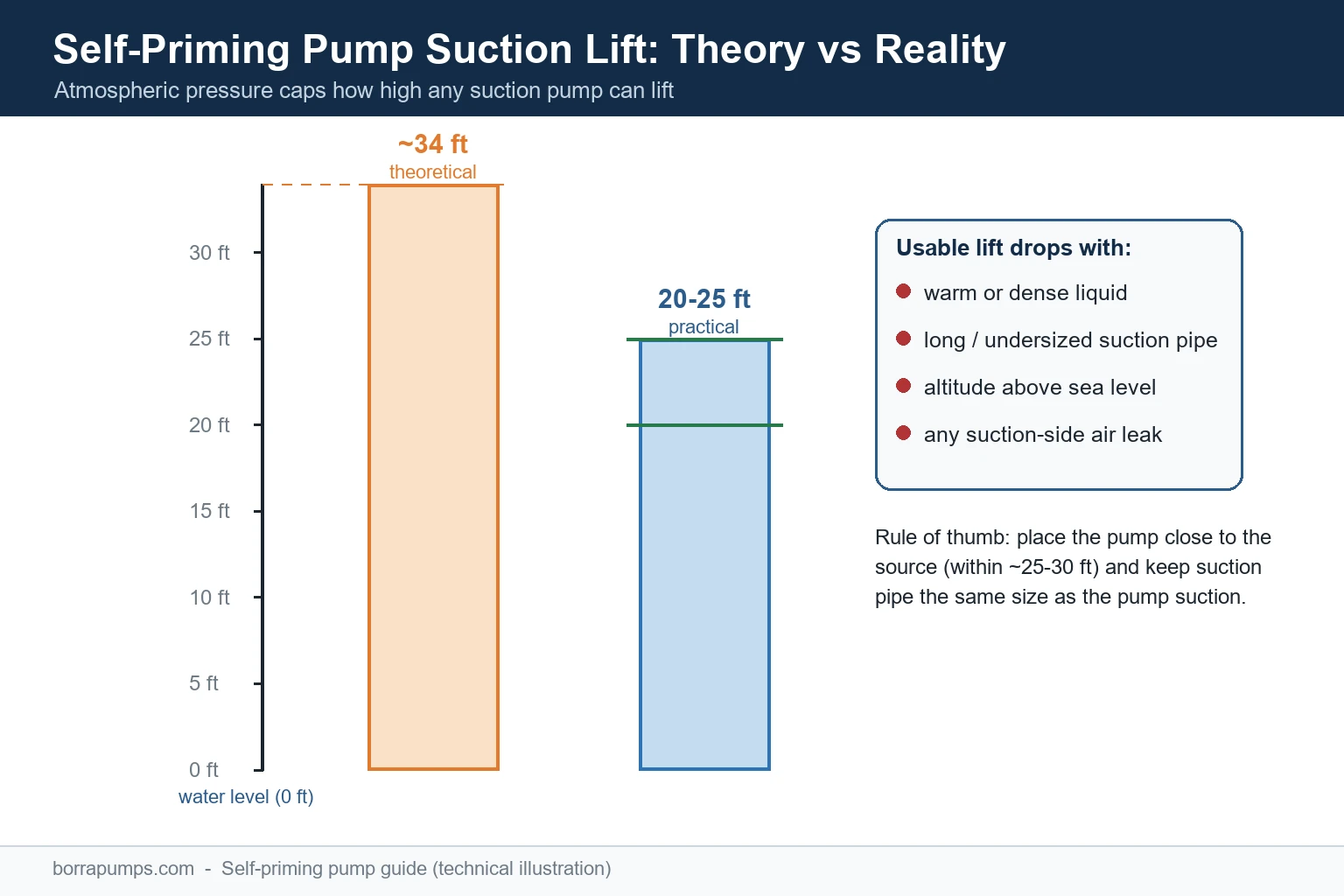
On suction lift systems, small air leaks can prevent prime without leaking liquid outward. Inspect flanges, gaskets, threaded joints, valve stems, instrument connections, drain plugs, casing seals, hose couplings, and the foot valve. Use only approved leak-testing methods suitable for the liquid and pressure; never apply unsafe pressure or flame. Confirm the pump casing and priming chamber are filled as required and that the priming system, ejector, vacuum pump, separator, and non-return devices operate correctly. On flooded suction, verify that the source valve is open and the line is vented where needed. Repeated loss of prime after shutdown can point to a leaking check or foot valve, trapped gas, or a suction route that drains back.
ตารางตัดสินใจโครงการ
| Observed symptom | Possible suction-side cause | การยืนยันตัวตน |
|---|---|---|
| Low flow with higher suction vacuum | Blocked strainer or pipe restriction | Compare suction pressure and inspect differential |
| Intermittent flow and bubbles | Air leak, vortex or low level | Check source, joints and submergence |
| Prime lost after shutdown | Foot/check valve leak or drain-back | Observe hold condition and approved leak test |
| Hose flattens during operation | Insufficient vacuum rating or failed liner | Inspect dynamically and replace correctly |
| Rapid repeat blockage | Upstream debris, ragging, scale or sediment | Identify removed material and entry path |
| Flow remains low after cleaning | Other system or pump fault | Check speed, rotation, discharge and wear |
Isolate and remove an internal blockage safely
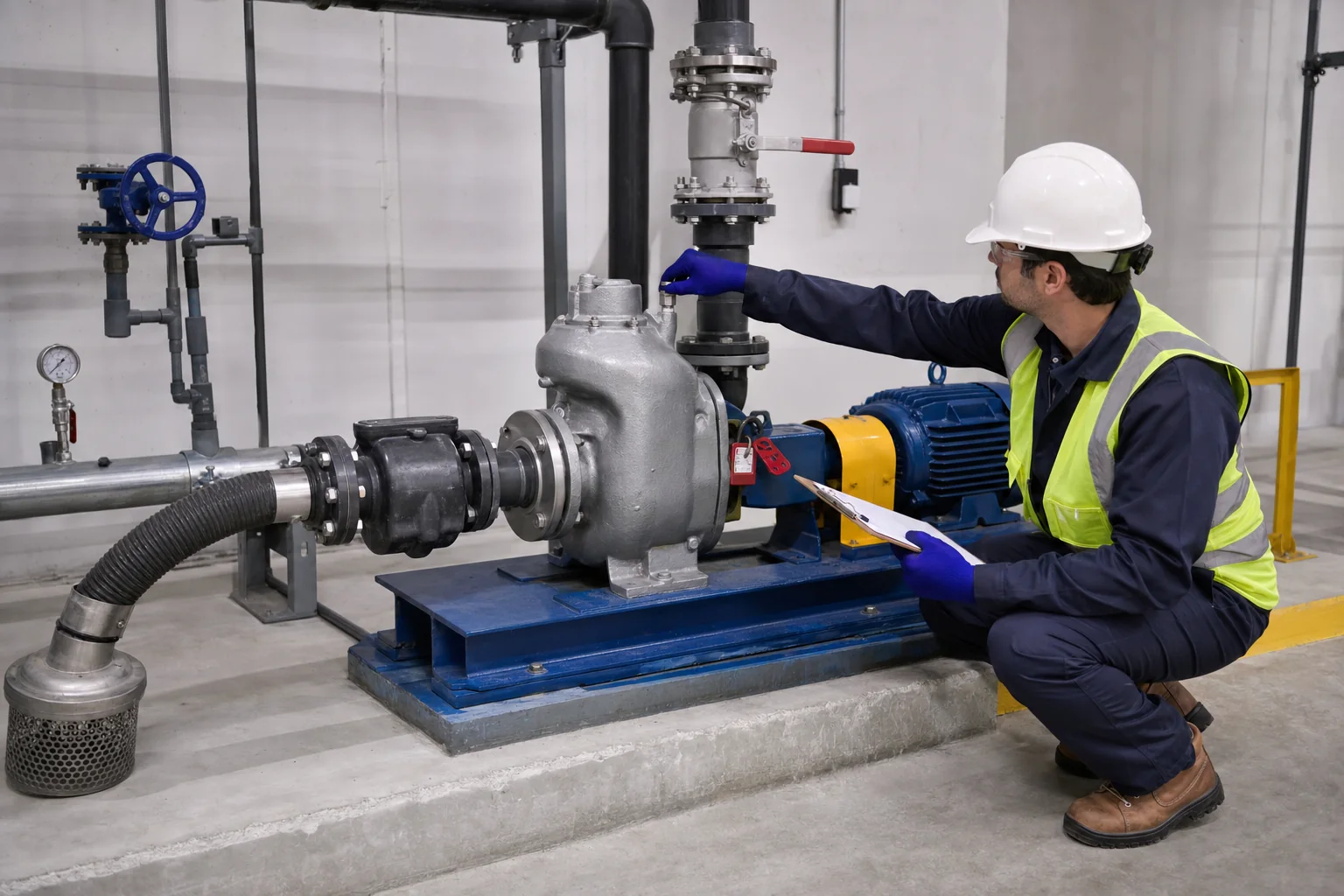
Review the safety data, temperature, pressure, biological hazard, confined-space risk, and environmental controls before opening the line. Stop the pump, isolate energy, close and secure valves, depressurize, drain to an approved location, verify zero energy, and provide containment. Heavy strainers and pipe sections need lifting plans. Use cleanout ports or removable spool pieces where designed rather than driving rods blindly through piping. Sharp debris, chemicals, and wastewater require appropriate tools and protective controls. After removal, inspect the material and its entry path. Ragging may need upstream screens or operating changes; scale may indicate chemistry or temperature; collapsed lining requires hose replacement; construction debris points to incomplete flushing. Restore gaskets, fasteners, supports, and valve positions under the approved procedure.
Prevent repeat blockages through system design
Match intake opening and strainer free area to the liquid and required flow. A finer screen reduces particle passage but can increase cleaning and suction loss. Provide accessible baskets, differential-pressure indication, duty/standby strainers, backwash, self-cleaning intake, or larger collection sumps where justified. Control velocity and avoid dead legs that collect solids. Keep the intake above settled sediment while maintaining submergence. For fibrous wastewater, select hydraulic passage and upstream handling together; a larger pump alone does not solve ragging. Include flushing and drain connections where they can be used safely. Operating procedures should define inspection triggers from pressure, flow, current, runtime, or level—not only a fixed calendar.
Recommission and verify the root cause is removed
Before restart, confirm all tools and debris are removed, covers and guards installed, valves positioned, vents and drains closed, piping supported, instruments restored, priming complete, and protection active. Start according to the pump procedure and observe suction pressure, discharge pressure, flow, speed, current, vibration, temperature, and leakage. Compare the readings with the original baseline and calculate whether the system operating point has returned. If the restriction recurs quickly, investigate the upstream process rather than repeating cleanout. Record the material, location, measurements before and after, photographs, maintenance action, and prevention recommendation. The goal is to restore hydraulic performance and remove the source, not simply to make the pump run for one shift.
บันทึกการจัดซื้อและการตรวจรับ
การเปรียบเทียบผู้จำหน่ายที่สมบูรณ์ควรใช้แผ่นข้อมูลกลางชุดเดียวกัน ให้นำการออกแบบและจุดทำงานสำรอง ของเหลว อุณหภูมิ ของแข็ง ความสูงของพื้นที่ติดตั้ง กำลังไฟฟ้า ระบบควบคุม การติดตั้ง ชั่วโมงการทำงาน จำนวน ปลายทาง และเอกสารที่จำเป็น ไว้ที่ด้านบน ปรับความแตกต่างของขอบเขตให้เป็นมาตรฐานก่อนที่จะเปรียบเทียบราคาหรือประสิทธิภาพ ขอใบโค้งที่ได้รับการรับรองหรือข้อมูลสมรรถนะ กำลังไฟฟ้าที่ใช้ ขีดจำกัดการทำงาน วัสดุ ขนาด น้ำหนัก จุดเชื่อมต่อ มอเตอร์หรือชุดขับเคลื่อน ชุดควบคุม อุปกรณ์เสริม การทดสอบ การเก็บรักษา ชิ้นส่วนอะไหล่ คำแนะนำในการติดตั้ง และขอบเขตการรับประกัน บันทึกความเบี่ยงเบนและข้อสมมติที่ยังไม่ได้ข้อสรุปทุกรายการ ในระหว่างการตรวจสอบทางเทคนิค ให้สอบทานคุณสมบัติแต่ละรายการที่เสนอเข้ากับข้อมูลนำเข้าของโครงการ แทนที่จะให้คะแนนสำหรับคุณสมบัติที่หน้าที่งานไม่ได้ต้องการ ในระหว่างการทดสอบเดินระบบ ให้วัดตัวแปรชุดเดียวกันกับที่ใช้ในการคัดเลือก เพื่อให้สามารถเปรียบเทียบผลลัพธ์ที่ติดตั้งจริงกับเกณฑ์พื้นฐานเดิมได้ หากสภาพหน้างานแตกต่างไป ให้ปรับปรุงการคำนวณและขออนุมัติจากผู้รับผิดชอบก่อนที่จะเปลี่ยนอุปกรณ์หรือการตั้งค่าการป้องกัน.
หัวข้อนี้เชื่อมโยงกับอุปกรณ์ BORRAPUMP อย่างไร
คู่มือนี้สนับสนุนการตรวจสอบเบื้องต้นของ industrial pump maintenance clogged suction pipe เส้นทางการสมัครใช้งาน ระบบไม่ได้กำหนดรุ่นสุดท้ายหรืออ้างว่าการกำหนดค่ามาตรฐานแบบเดียวจะเหมาะกับทุกโครงการ โปรดส่งจุดปฏิบัติงาน ข้อมูลของเหลว แบบแปลนหน้างาน แหล่งจ่ายไฟ ระบบควบคุม ปริมาณ ปลายทาง การอนุมัติที่จำเป็น และขอบเขตการตรวจสอบ เพื่อให้สามารถตรวจสอบผลิตภัณฑ์ที่เสนอเทียบกับการใช้งานจริงได้.
คู่มือวิศวกรรม BORRAPUMP ที่เกี่ยวข้อง
- การแก้ไขปั๊มน้ำอัตโนมัติ (หรือการแก้ไขปัญหาปั๊มน้ำชนิดล่อน้ำได้เอง)
- self-priming pump cavitation checks
- การแก้ไขปัญหาปั๊มน้ำโอนย้าย (หรือ ปั๊มสูบน้ำ)
แหล่งข้อมูลที่เชื่อถือได้และการศึกษาเพิ่มเติม
ระบบปั๊มของกระทรวงพลังงานสหรัฐฯ; การควบคุมพลังงานที่เป็นอันตรายของ OSHA; พื้นที่อับอากาศตามมาตรฐาน OSHA. แหล่งข้อมูลเหล่านี้ให้บริบทด้านความปลอดภัย สิ่งแวดล้อม หรือวิศวกรรมทั่วไป กฎระเบียบที่ใช้อยู่ในปัจจุบัน การอนุมัติโครงการ และคำแนะนำเกี่ยวกับอุปกรณ์ยังคงมีผลบังคับใช้เหนือกว่า.
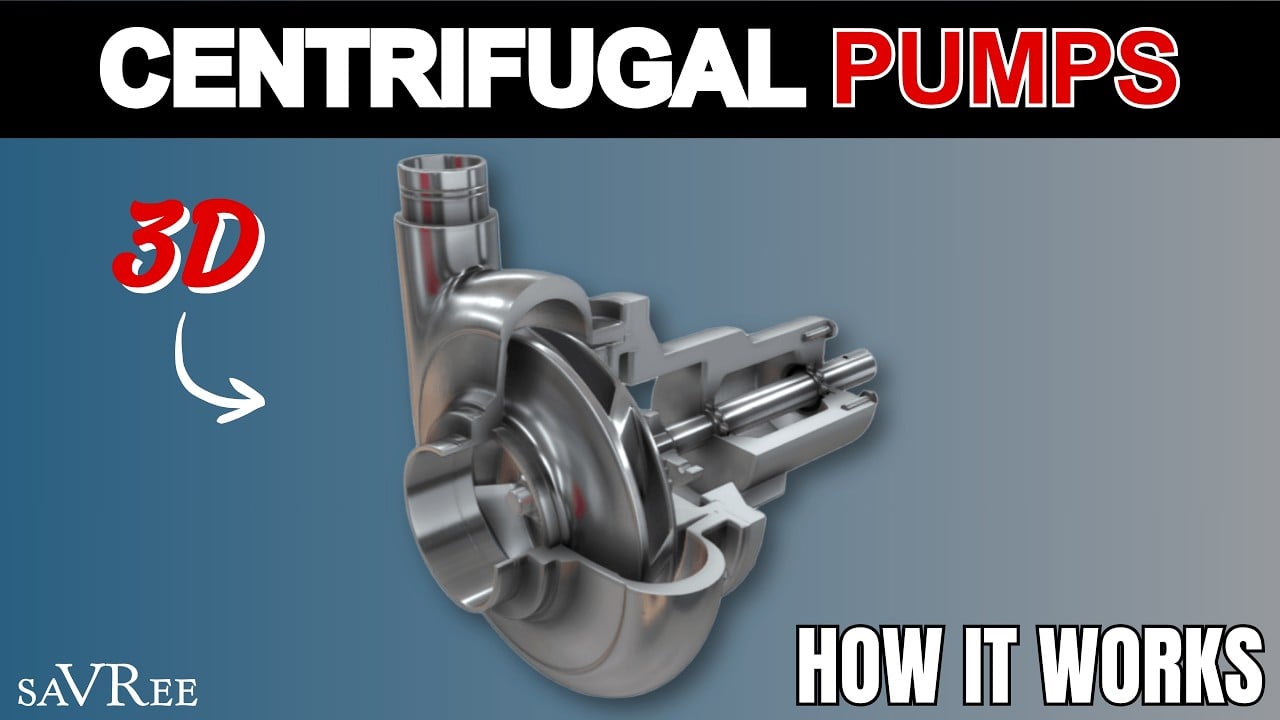
วิดีโอเพื่อการศึกษาโดย saVRee: หลักการทำงานของปั๊มแรงเหวี่ยง. เอกสารนี้อธิบายหลักการเบื้องต้นและไม่ได้ใช้แทนคำแนะนำเฉพาะของโครงการ.
คำถามที่มักถูกถาม
คุณจะทราบได้อย่างไรว่าท่อดูดอุดตัน
เปรียบเทียบอัตราการไหล ความดันดูดและความดันจ่าย กระแสหรือกำลังไฟฟ้า ระดับแหล่งกำเนิด และข้อมูลพื้นฐาน อาการที่คล้ายคลึงกันอาจเกิดจากอากาศ ความเร็ว การหมุน การสึกหรอ หรือการจำกัดการจ่าย.
ฉันสามารถทะลวงท่อดูดที่อุดตันในขณะที่ยังเชื่อมต่ออยู่ได้หรือไม่
ห้ามดัดแปลงขั้นตอน แยกส่วน ตัดกระแสไฟฟ้าหรือพลังงาน ปลดความดัน ระบายของเหลว ประเมินอันตรายจากของเหลว และใช้วิธีการทำความสะอาดที่ได้รับอนุมัติ.
ทำไมท่อดูดถึงแบนฟีบเฉพาะตอนทำงานเท่านั้น
สุญญากาศสูงขึ้นระหว่างการทำงาน ท่ออาจมีพิกัดไม่เพียงพอ ชั้นบุภายในชำรุด เสียหายจากความร้อน หรือมีการอุดตันมากเกินไป.
ฉันจะป้องกันไม่ให้ท่อตันซ้ำอีกได้อย่างไร?
Identify the removed material and its source, then address intake design, screening, sump condition, velocity, cleaning access, process controls, and pump passage together.
จุดตรวจสอบโครงงานสุดท้าย
ก่อนทำการสั่งซื้อหรือเปลี่ยนแปลงหน้างาน ให้ตรวจสอบความถูกต้องตรงกันระหว่างหน้าที่และแบบที่ได้รับการอนุมัติ กับข้อมูลของผู้จำหน่าย วัสดุ ขนาด น้ำหนัก จุดเชื่อมต่อ ไดรฟ์ ชุดควบคุม อุปกรณ์เสริม ระบบป้องกัน ขอบเขตการทดสอบ เอกสาร ชิ้นส่วนอะไหล่ วิธีการติดตั้ง การเข้าถึงเพื่อการบำรุงรักษา และข้อกำหนดของปลายทาง บันทึกข้อสมมติฐานที่เหลืออยู่และกำหนดผู้รับผิดชอบในการปิดประเด็นเหล่านั้น ข้อมูลที่ได้รับการยอมรับขั้นสุดท้ายจะต้องใช้เป็นพื้นฐานเดียวกันสำหรับการติดตั้ง การทดสอบการเดินระบบ และการบำรุงรักษาในอนาคต.